

 Bee & Beetle
 Northern Pike
 Wood Frog
 Hognose Snake
 Owl & Chickadee
 Bat, Mink & Coyote

Peculiar Pollinators in the Midwest
We all know the honeybees that pollinate our flowers in the Midwest. But did you know there are some other, shall we say, peculiar pollinators? Learn about the importance of lesser-known pollinators.

These Midwest marvels are wild—and wildly important to protect.


Since Superman first soared onto comic book pages in 1938, our imaginations have been captivated by the idea of superpowers. While these fictional heroes inspire us, nature has its own cast of extraordinary characters, right here in the Midwest.
Even more exciting—these animals’ abilities come directly from nature. From wetlands to woodlands, these creatures use these incredible adaptations to thrive in and shape their habitats.


While these wildlife adaptations may be astonishing, they’re crucial physical and behavioral traits that evolved over time, enabling these animals to survive and thrive in their native environments.
But even the most well-adapted animals can’t go it alone. They need their habitats to remain healthy, intact and whole to continue thriving. By conserving and connecting forests, wetlands and prairies, TNC and our partners ensure that nature’s most remarkable creatures can continue to flourish for generations to come.
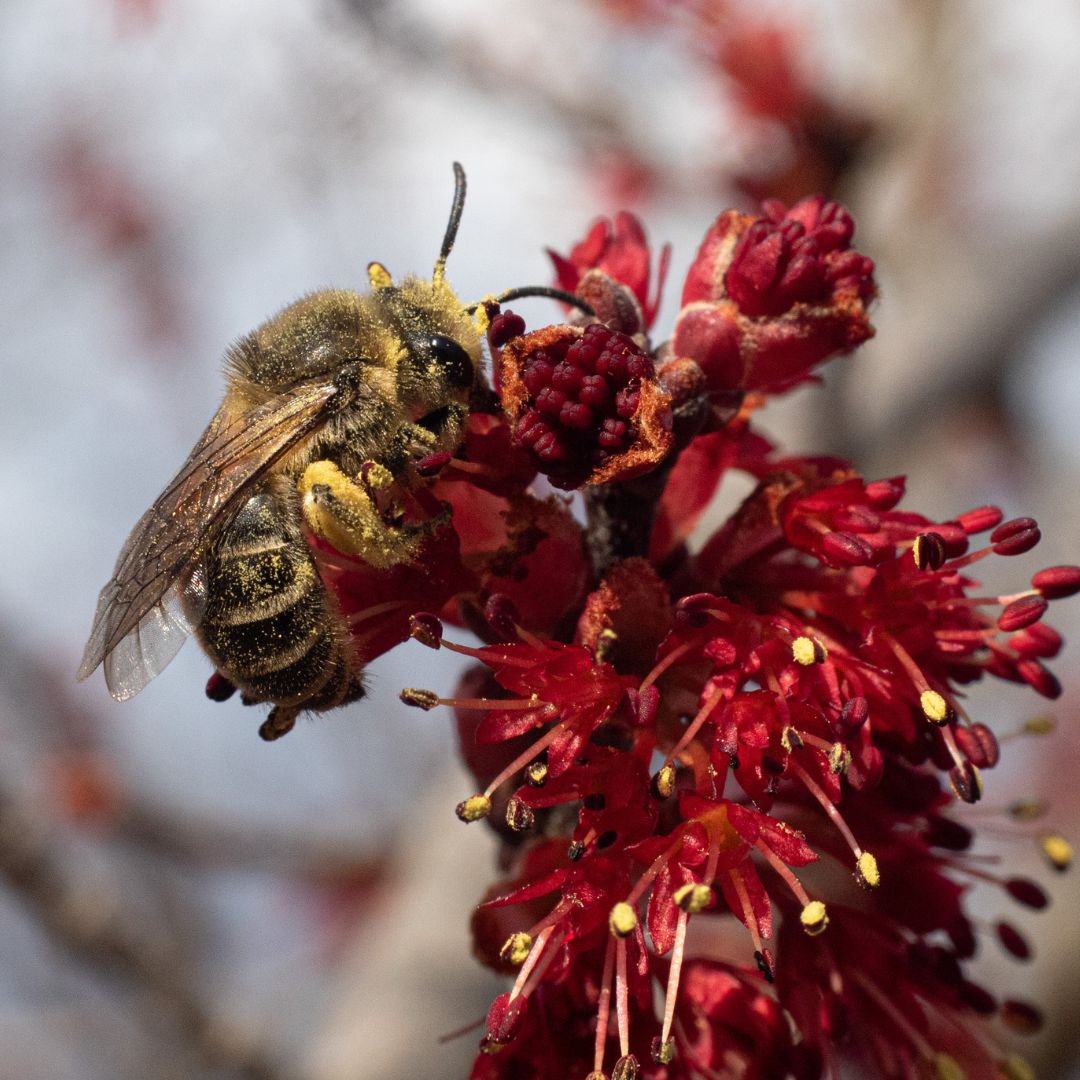
Bioplastic Pioneer
These tiny bees create waterproof nests by making a bioplastic in their abdomens.
Also known as cellophane bees (Colletes spp.), these macaroni-sized insects are among the Midwest's most important native pollinators. With heart-shaped faces and soft yellow-and-black bands, they may look ordinary, but they’re nature’s original bioplastic engineers.
These solitary ground-nesting bees dig tunnels underground, with small chambers for each egg. Every chamber is lined with a waterproof, plastic-like polymer produced by the female bee. This natural “cellophane” protects the egg and preserves the nectar-and-pollen food supply left for the developing larva.
Scientists are studying this remarkable natural bioplastic as inspiration for more sustainable materials. By creating durable, biodegradable solutions millions of years before humans invented plastic, these native bees may help shape a greener future.
Discover more native wild bees in the Wild Bees Field Guide.
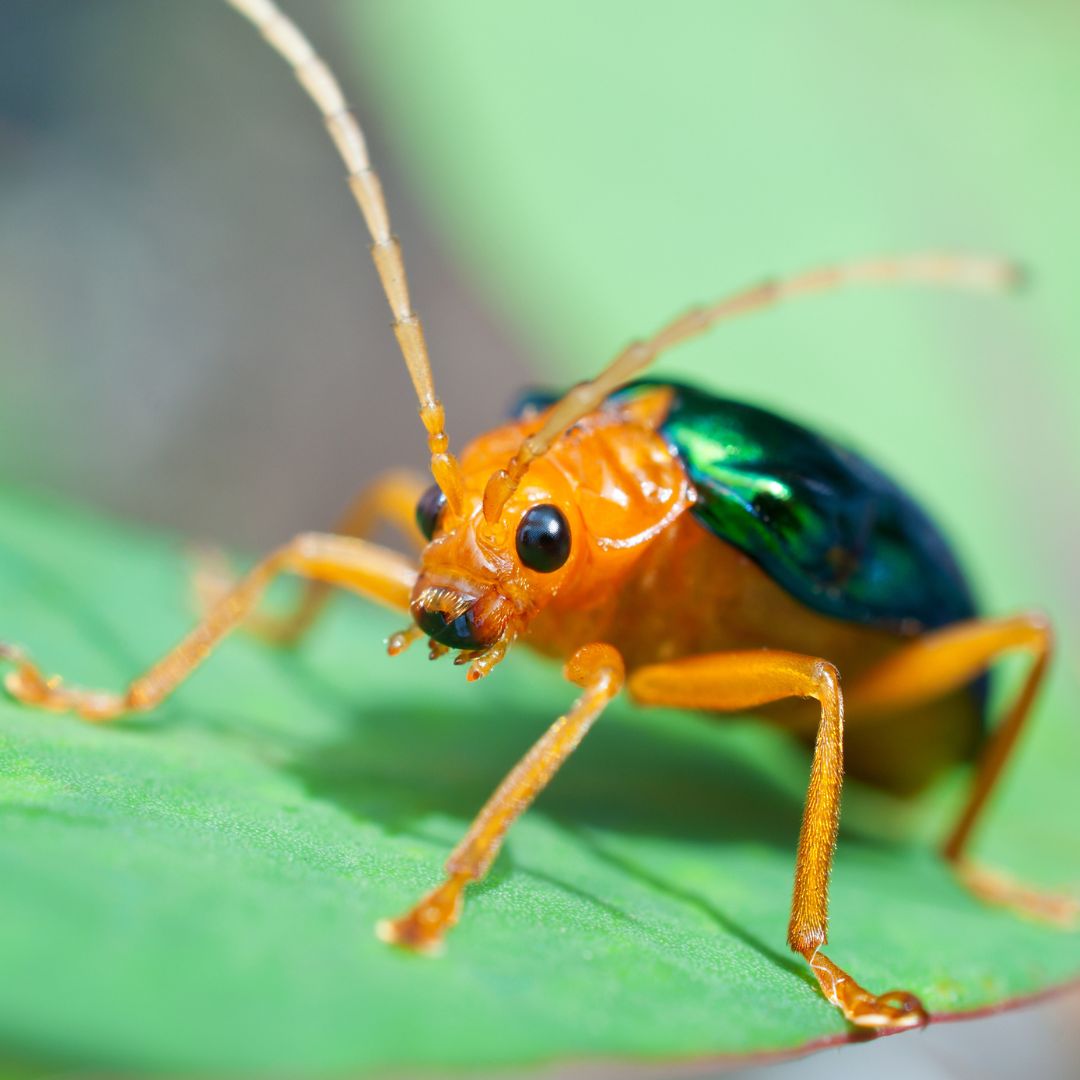
Chemical Cannon
This beetle doesn’t just defend itself—it blasts predators with a built-in caustic chemical cannon.
Don’t let their size fool you—bombardier beetles (Brachinus spp.) are among the Midwest’s most explosive insects. About an inch long, they live in forests and grasslands, hiding under leaves and logs. With reddish heads, bluish wing covers and nocturnal habits, they hunt insects and worms at night—and often hang out in groups when not hunting.
Their real superpower? A built-in chemical cannon. Inside their abdomen, two glands produce hydrogen peroxide and hydroquinone. When threatened, the beetle mixes them in a third chamber, triggering a boiling, corrosive reaction. With a loud pop, it blasts the corrosive spray from its rear at predators. It can swivel its abdomen nearly 270 degrees for pinpoint aim, too.
From PBS
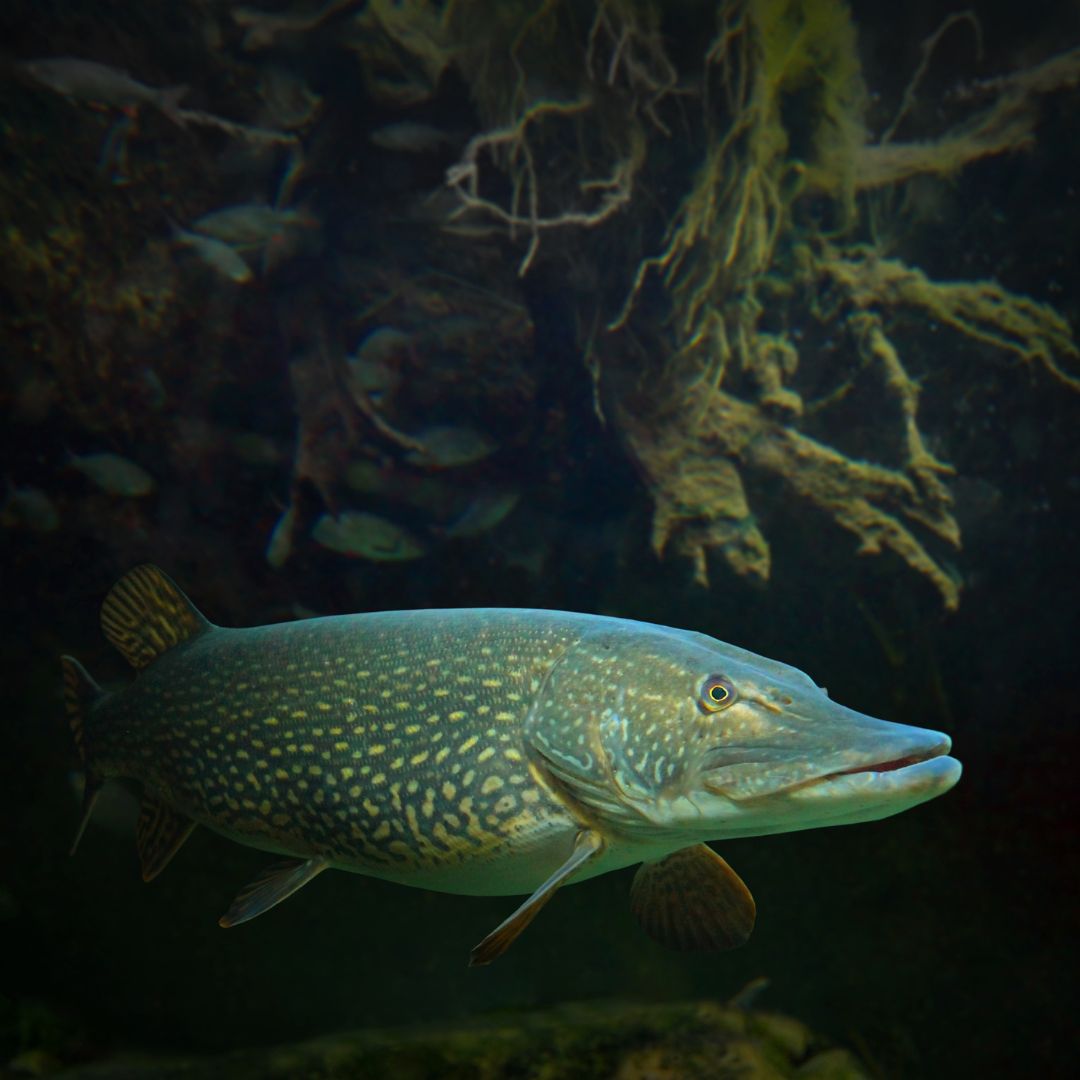
Blind Precision
Guided by unbelievably sharp senses, this fish doesn’t even need to see its prey.
The northern pike (Esox lucius) is one of the Midwest’s top freshwater predators. Long and torpedo-shaped, it’s built for ambush—launching from a standstill with a powerful tail and slick, slime-coated body. Large eyes give it a nearly 360° view, perfect for tracking prey at high speed.
But its real edge lies in its lateral line system: specialized pores and sensory organs along its body that detect the faintest water vibrations. Even blind, a pike can strike with deadly accuracy, guided by movement and pressure changes alone. This blend of speed, stealth and sensory precision makes the northern pike a master hunter—and a crucial player in healthy aquatic ecosystems.
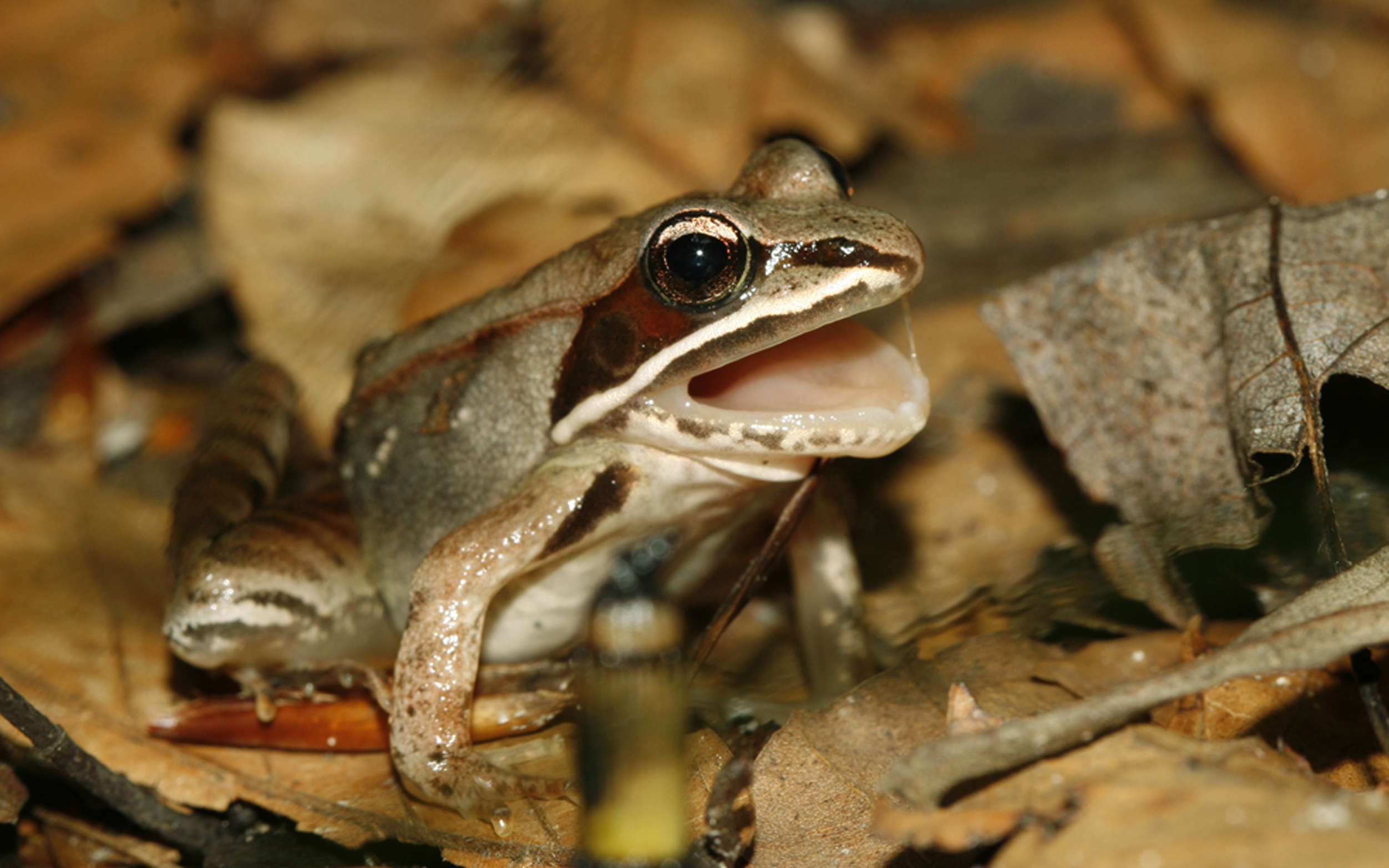
Icy Wonders
The cold doesn’t bother these frogs.
In the middle of a Midwest winter (or an early spring cold snap), what do you do if you’re a frog who depends on air temperature to keep your body warm? If you’re a wood frog (Lithobates sylvaticus), you simply freeze nearly solid until it gets warm enough to thaw you out.
When temperatures drop, wood frogs flood the areas between their tissues with glucose, a natural antifreeze. Ice begins to form between their cells, and their heart and lungs slow and stop, as the frog enters a kind of suspended animation state. When warmth returns, it thaws and hops away—one of nature’s most astonishing adaptations for survival. This amazing ability marks them as the only North American frog found north of the Arctic Circle!
Masterpiece Theatre
When danger strikes, this snake puts on the performance of a lifetime.
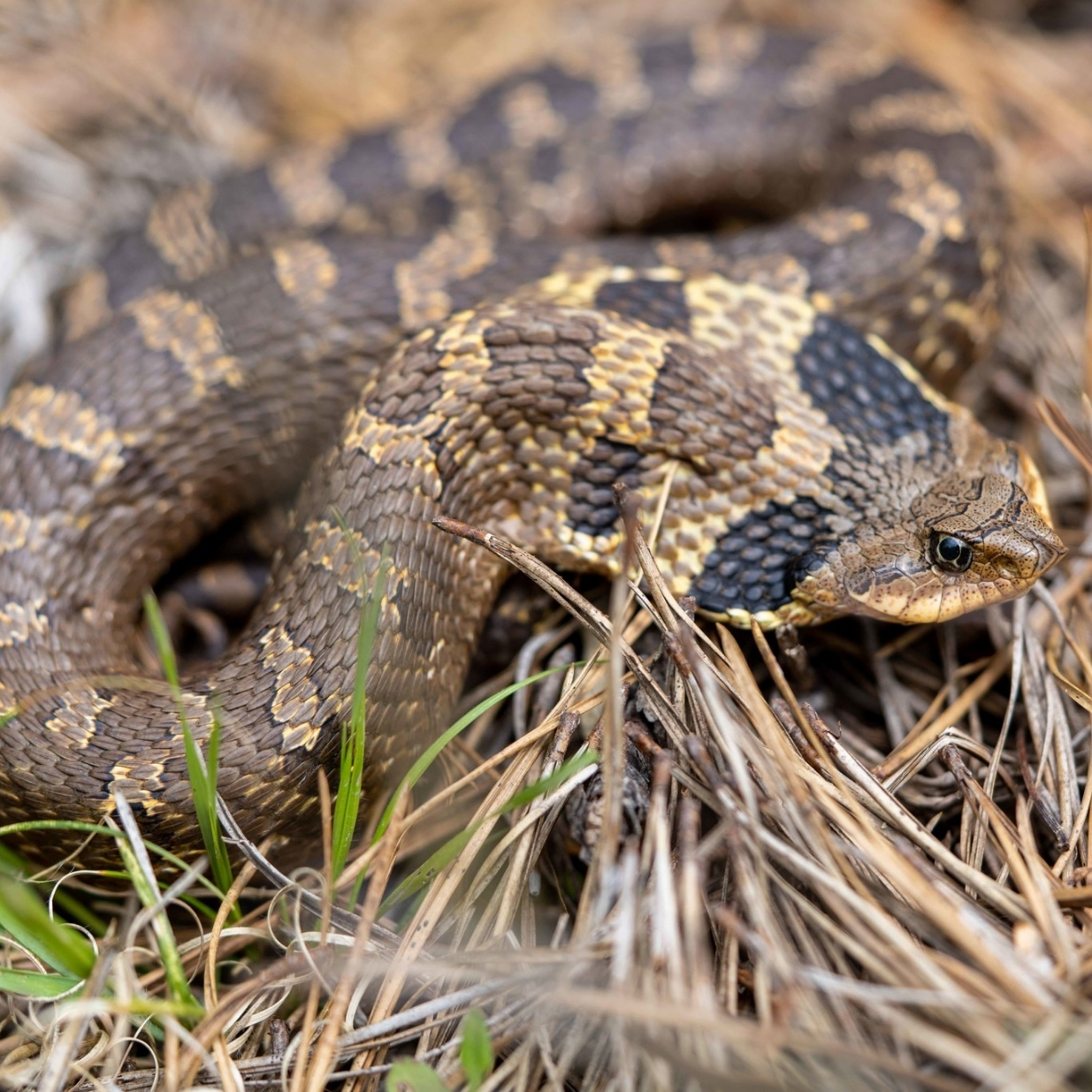
With a slightly upturned snout and a stout, three-foot-long body, the eastern hognose snake (Heterodon platirhinos) is one of the Midwest’s most convincing actors. Not only can it act like a venomous threat (it’s not)—it can become a convincing corpse when scared.
Hognose snakes are not dangerous to people, but they will try to convince you they are. First, a hognose will act like a much scarier snake, flattening its neck like a cobra, hissing loudly and striking out fast (without biting).
If that fails, the snake begins to convulse and thrash until it finally dies belly-up. Its tongue hangs from its gaping mouth, dripping drool. A foul smell starts to drift around the snake as it lies limp and still for up to 45 minutes.
However, despite the award-winning performance, these snakes have a tell: if you flip a “dead” hognose onto its belly, it’ll roll back over to stay deceased.


Every month, discover incredible wildlife, uplifting conservation stories, nature news from near and far and simple ways to help protect the world we share.
Sign Up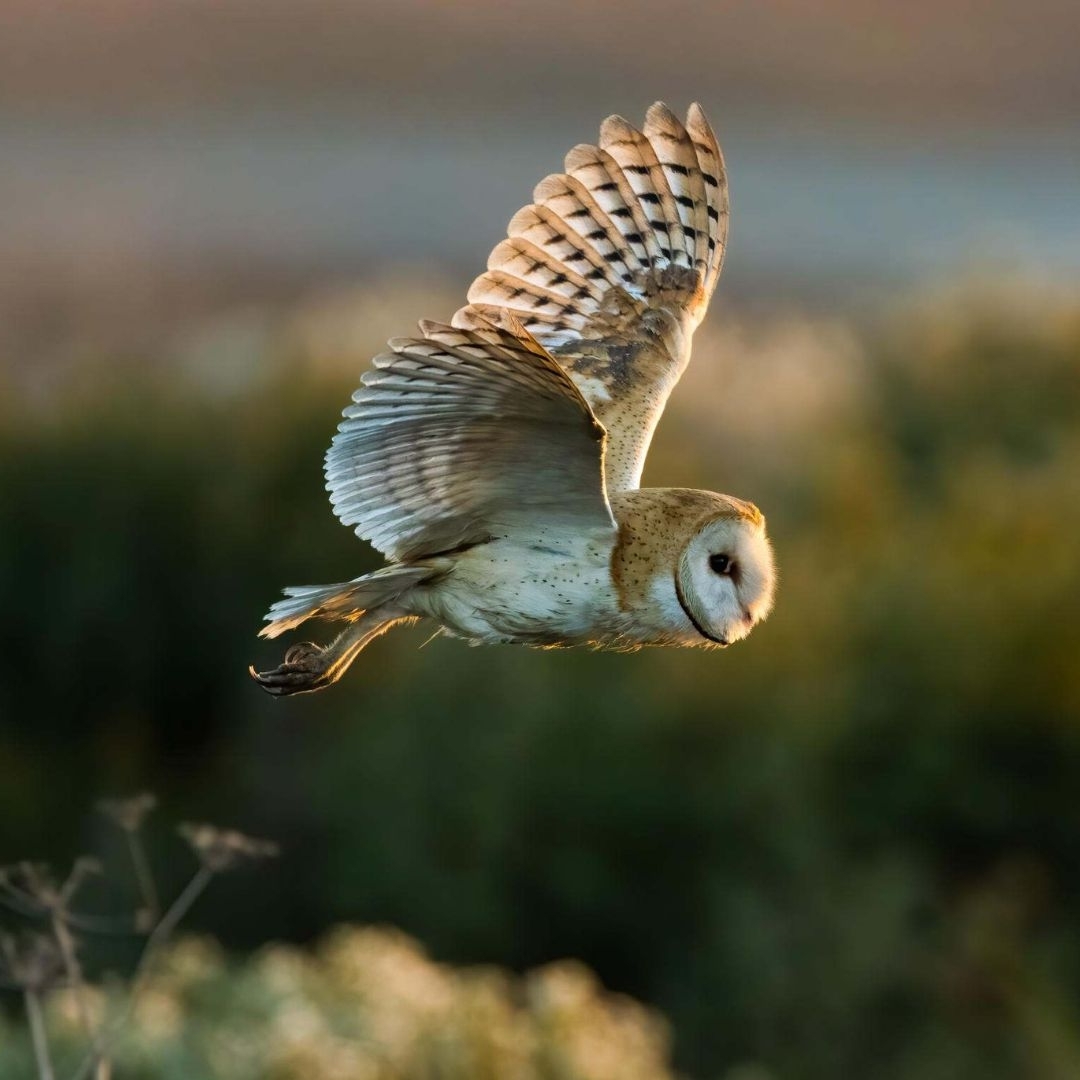
Feathered Phantom
Quiet wingbeats and pinpoint hearing make this owl a nightmare for its prey.
The American barn owl (Tyto furcata) is a ghostly figure in the night sky over grasslands, farmlands and suburban neighborhoods in the Midwest. At dusk, it emerges, ready to activate its superpowers—extraordinarily sensitive hearing and swift, silent flight.
These nocturnal predators detect prey by sound alone, even in total darkness or beneath snow. Their heart-shaped face funnels sound to asymmetrical ears—one higher than the other—allowing pinpoint accuracy in locating prey. In fact, their ability to locate prey by sound is one of the best of any animal ever tested.
Once locked on, the owl strikes in silence. Its broad wings are lined with soft, velvety feathers and comb-like edges that break up air turbulence, muffling wingbeats and allowing it to swoop down unheard.
Brainy Bird
Every year, this tiny bird remakes its brain to survive winter.
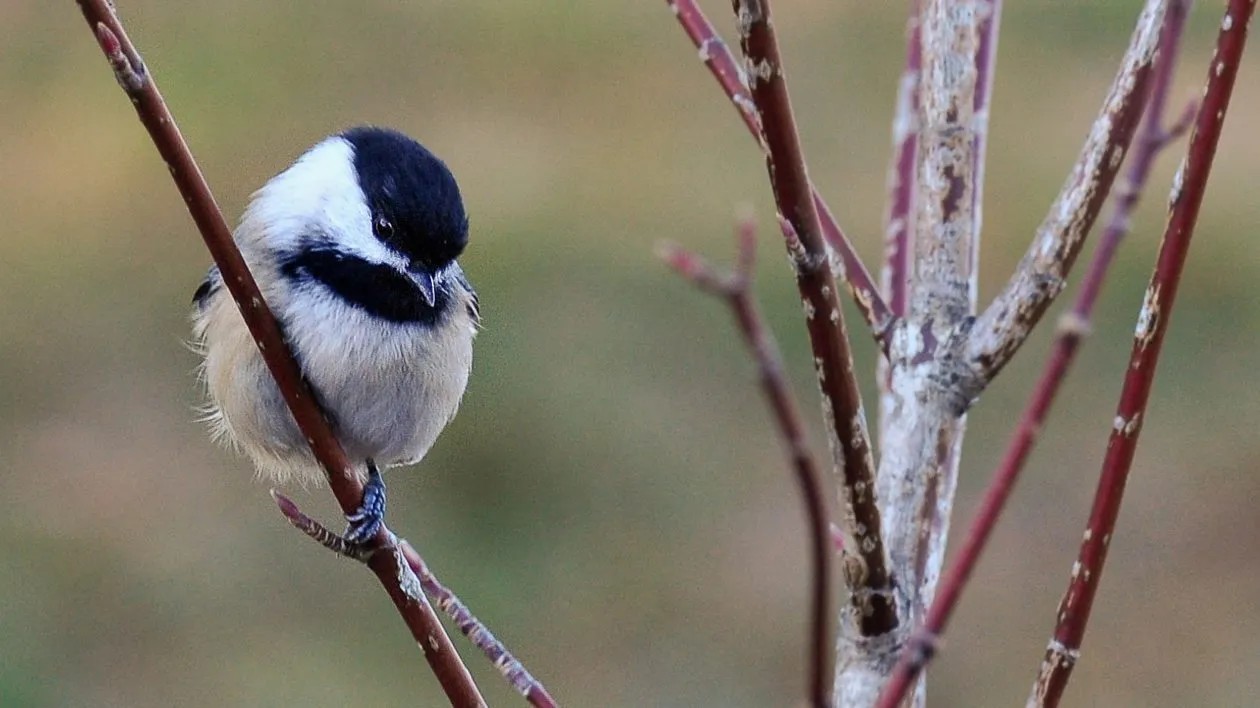
Black-capped chickadees (Poecile atricapillus) are small, social songbirds found throughout the Midwest. But behind their tiny size lies a truly superpowered brain.
Each fall, when they’re done breeding, chickadees begin to rewire their brains. Old neurons are pruned, new ones form and the part of the brain responsible for spatial memory grows up to 30%. This brain makeover helps them remember every place they’ve stashed food, adapt to new social orders in flocks and remember new predator behaviors.
Then in spring, their brains change again, optimizing for nesting and raising young. It’s one of nature’s most remarkable examples of seasonal neuroplasticity.
Sound Vision
Imagine yelling at the sky to find your dinner every night.
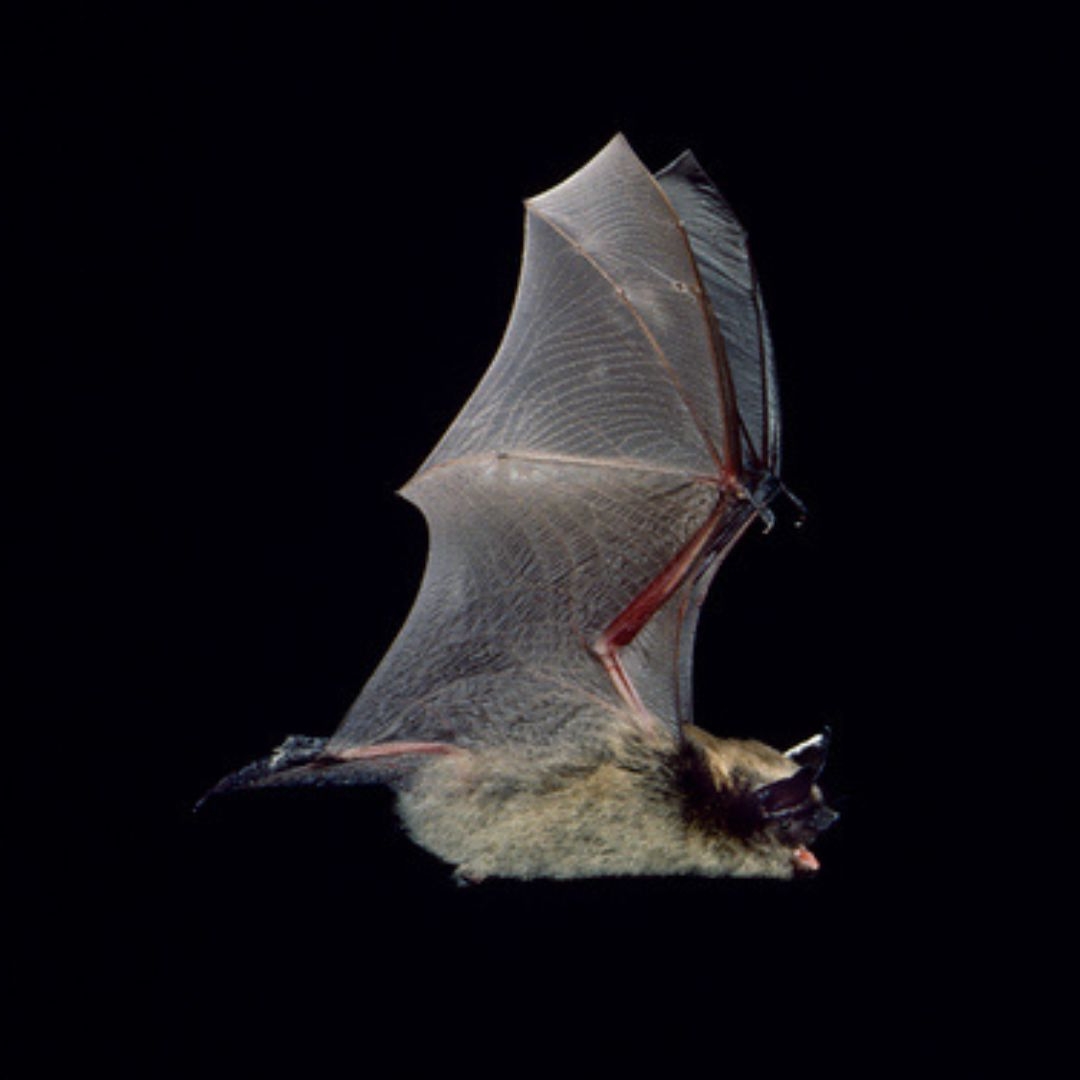
The little brown bat (Myotis lucifugus) is a small insect-eating mammal and one of the Midwest’s most common bat species. These flying mammals have an extraordinary ability—they see with their ears.
That sounds bonkers, but it’s true. Little brown bats use a biological sonar called echolocation to hunt insects. At dusk, the bats take to the sky and emit up to 20 high-frequency calls per second. These calls bounce off objects and return as echoes, which their brains translate into a detailed map of their surroundings.
What’s even more impressive—they do this while both they and their prey are in the air. Through echolocation, little brown bats can detect insects as small as a tenth of an inch and adjust their flight on a dime to follow their prey. A single bat can consume half its body weight in insects each night, making them a powerful natural ally in pest control.
Saving Bats in the Midwest
Super Athlete
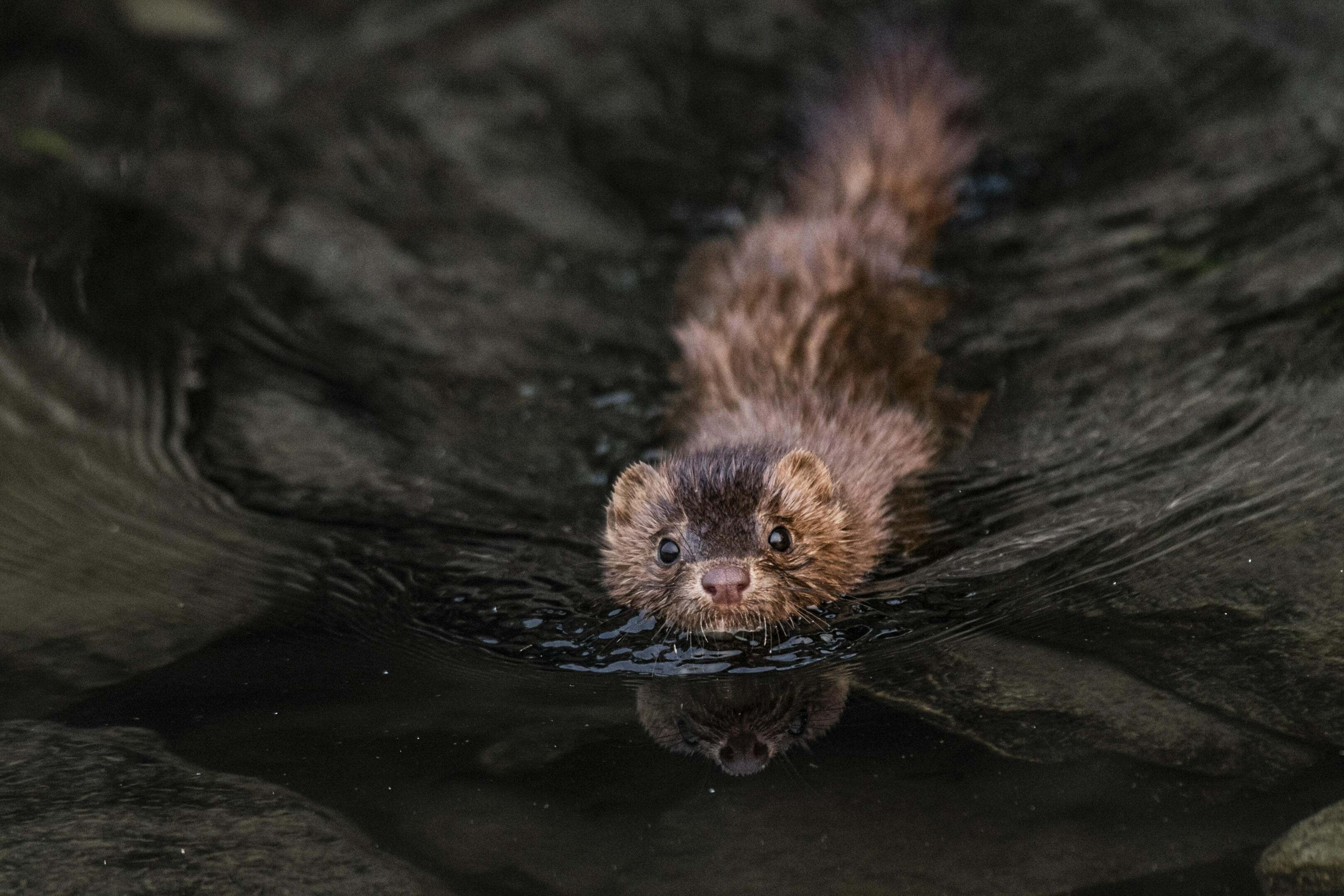
If minks had a motto, it would be “swim like an otter, climb like a squirrel.”
Even though they top out at three pounds, the American mink (Neovison vison) is one of the region’s fiercest predators. Their unmatched athleticism lets them hunt both on land and in water, sometimes taking on prey many times their size.
In water, minks are powerful swimmers, capable of diving 16 to 18 feet deep and swimming up to 100 feet underwater. In warmer months, they can swim for hours without rest, hunting fish, crayfish and muskrats.
On land, they’re just as formidable—sprinting, climbing trees and leaping between branches. They will chase squirrels into the treetops, matching them jump for jump until their prey is caught.
Survival Strategist
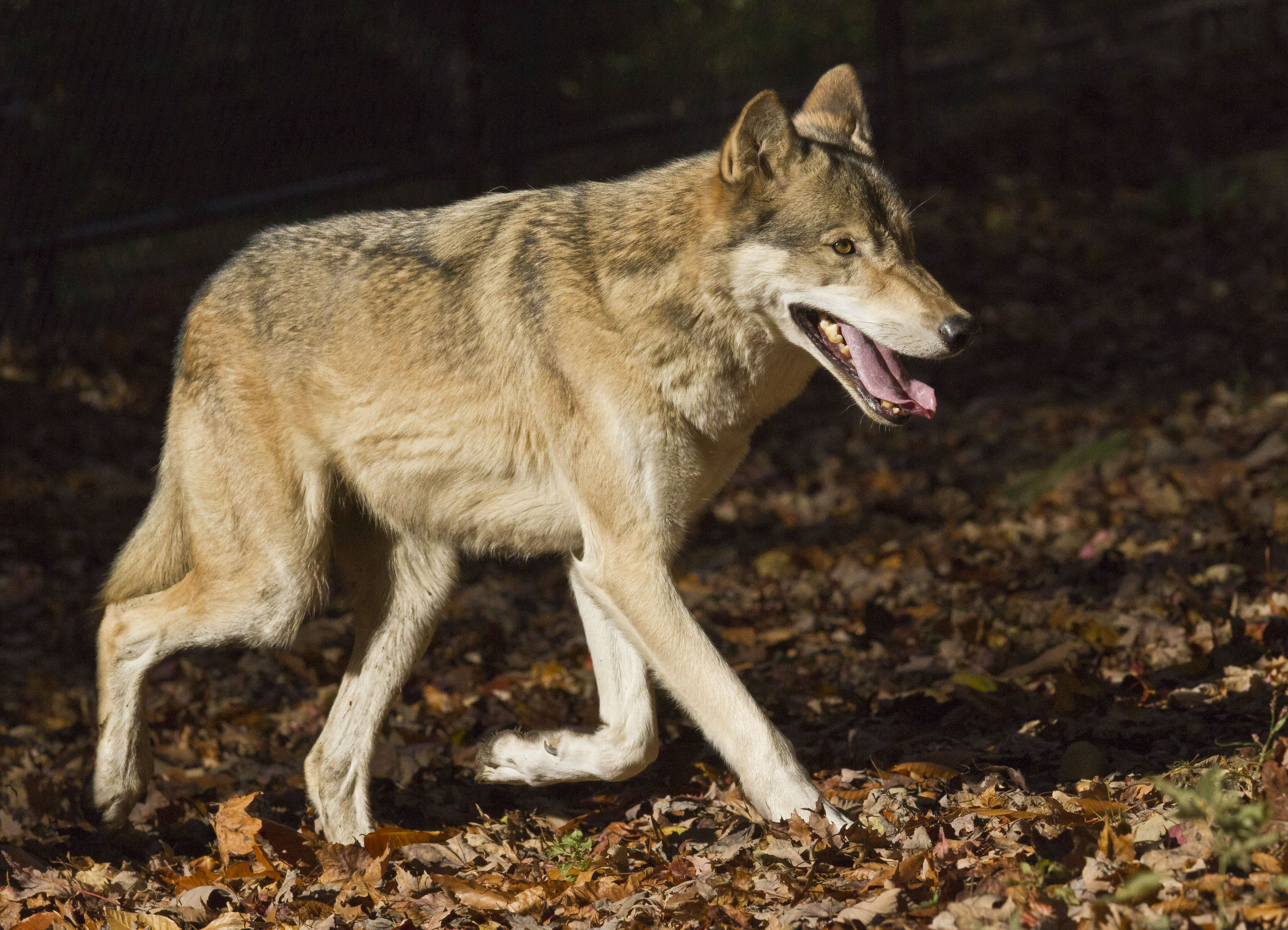
Everywhere a coyote goes, it finds a home.
Coyotes (Canis latrans) have coexisted with humans for more than 15,000 years, making them one of North America’s most adaptable and resilient mammals. They’re also one of the continent’s most vocal mammals, communicating with each other through barks, yips, growls and howls.
Once limited to the western U.S., coyotes now thrive nationwide, from wild prairies to urban centers. Their superpower? Unmatched adaptability, thanks to their omnivorous diet and high intelligence. Together, those traits allow coyotes to adapt and adjust their behavior to any environment they are in.
Want to know more about the bizarre and amazing wildlife in the Midwest? Check out the stories below!


