

Make Headway With the best tools they have, people are working together every day to find the solutions our planet needs. © Erica Sloniker/TNC
It can be tough-going out there, no? But look around: People are at work fixing things. At The Nature Conservancy, our staff and partners are working together every day to find the solutions our planet needs. In honor of everyone who’s ever rolled up their sleeves to make a fix for nature—and there are a lot of us!—we’re sharing powerful examples of people who put their hearts into solving problems of all shapes and sizes. We call them fixers.
Meet Our Fixers
Meet Ron: He's Making a Fix for Oregon Fish
Meet Liz: She's a Good Neighbor
Meet Laurel: She Brings New Energy Where Water’s in Short Supply
Meet Justin: He sees a Bright Future for Old Coal Mines
Meet Laura: She’s Standing Tall for Shortgrass Prairie
Meet Diana: She’s Planting Trees in the City
Meet Aaron: He’s Working Alongside Farmers to Grow Crops with Less Water
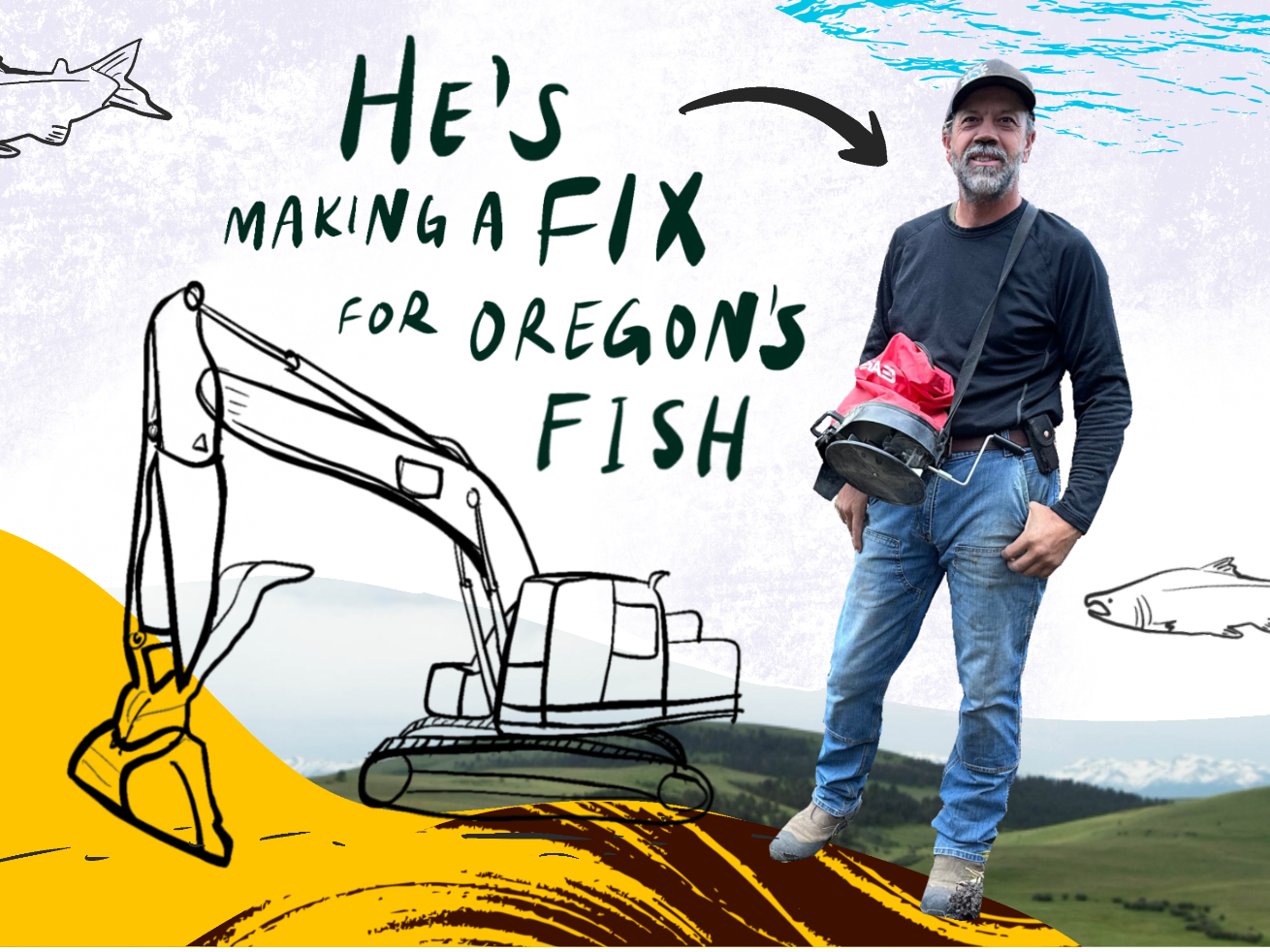
It’s been said that a bad day fishing beats a good day working, but Ron King is one guy who doesn’t see it that way. Not that he doesn’t love to fish. He does. It’s that he also loves his work. Ron has built a business running big machinery, which means he moves a lot of dirt. At the end of the day, he likes how he can see the headway he’s made.
“It’s doing what I love to do,” he says. “My happy place is sitting in a piece of equipment.”
Last summer found him revving his diesel-powered excavator at the 51-square-mile Zumwalt Prairie Preserve, where TNC began its stewardship 25 years ago. It’s earthwork, but it’s about fish, too. A stream called Camp Creek is where a lot of steelhead trout once got their start in life. But after a century of settlement, this tributary stream of the Snake River was in trouble.
There was a ranch road running right down the middle of what had been streambed. Thickets of willows and hawthorn had disappeared and along with it, the cooling shade of a streamside forest. Camp Creek had lost its meanders and pools of cool water, making it more of a deep ditch. Hardly a stream.
“It just wasn’t capturing, storing and releasing water in a way that was helpful to wet meadows, helpful to things like Columbia spotted frogs and steelhead trout. What that means downstream is that you’ve got less water in the stream later in the year, and in some cases fish that are stuck in these disconnected pools,” says Jeff Fields, TNC’s Zumwalt Prairie Preserve manager. He oversees the multi-year project alongside restoration ecologists and in partnership with the Nez Perce Tribe and Trout Unlimited.


Fish for the Future
As the climate warms, scientists say it’s the healthiest streams that will offer the best habitat for a range of threatened species like Chinook salmon and bull trout, so Ron’s work to fix the stream gives the fish a fighting chance.
Casting alongside his cousin on the great fishing rivers near his Oregon home, he’s caught more than a few steelhead—it’s a popular outdoor diversion in the Pacific Northwest. And if you don’t know, the hunt for mighty steelhead draws anglers of a certain type. Is it mania? Whatever it is, his cousin’s got it.
“He’s one of those nuts,” Ron says.
Fishing for steelhead is no lazy day in the sun. Not at all. Ron fishes for sea-run steelhead trout late in the fall, well after snow comes to the high country.
“That is one thing about steelhead fishing,” he says. “You’re usually cold.”
Even so, you don’t hang it up early.
“Steelhead are, I don’t know if you’d say finicky, but they can be difficult to catch. You’ve got to put your time in,” he says.
Up at Camp Creek, turning back the clock and restoring the stream took more than 500 dump-truck loads in a carefully designed cut-and-fill operation. The crew put in more than a good day’s work—weeks, actually—all for the fish. And that’s adding up to more good days fishing.
Forest fires are a fact of life in the Mountain West. They may not burn every year, or even every century. But the history of fire in these forests is clear.
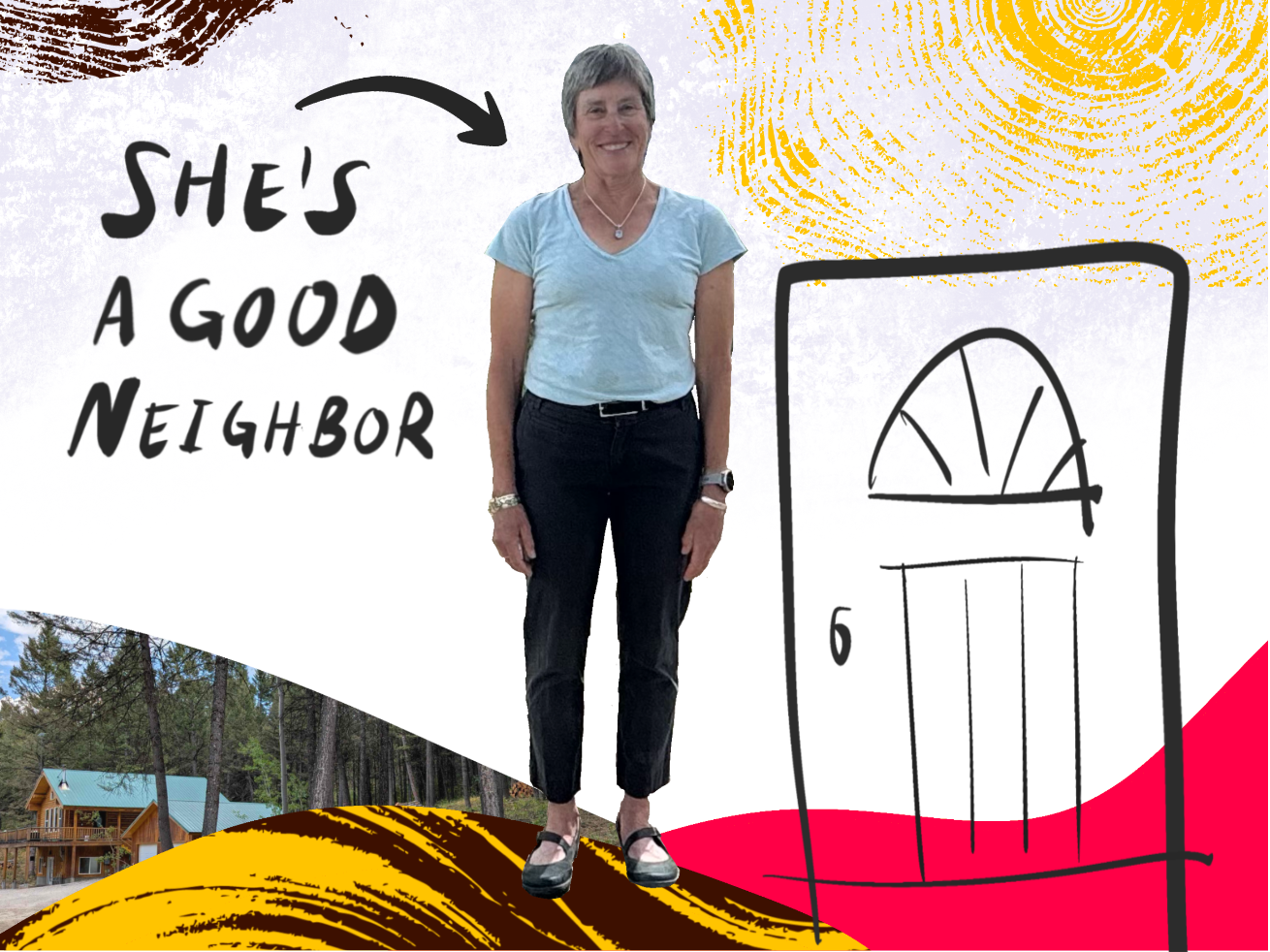
“It’s always been here,” says Liz Davy.
Liz is a retired U.S. Forest Service ecologist in Idaho. She still sees the forest with the eyes of a curious scientist, but lately she’s come to be known as a helpful neighbor. Make that a helpful neighbor to many.
Liz’s home isn’t far from Yellowstone National Park. In her town and many others like it, she’s been busy showing how relying on neighborly connections to share simple actions is the best way to keep neighborhoods safe amid the growing risk of living in and around western forests.
Even if fire has always been a part of the forest, Liz says the world around us is changing. For one, homes now occupy places that used to be nothing but forest. In areas like this, where low-intensity fires on the ground that don’t burn hot enough to reach into the treetops are a natural part of the ecosystem, building homes has always brought some risk. But now, after a century of aggressive firefighting, many forests have more trees than ever before—they’re actually too crowded. All that stored-up woody fuel combined with warming temperatures mean fires burn hotter. That's making fires more destructive than ever before.

Safer Neighborhoods
With help from experts like Liz, people are seeing the forest in a new way. She directs the Greater Yellowstone Fire Action Network that was launched with support from TNC. Their mission is inspiring people to put in the effort to make their neighborhoods safer places to live.
“It’s not just a wildland problem,” she says.
Whether it’s at backyard potlucks or in chats at the post office, Liz says neighbors are coming together to protect their neighborhoods.
“My main job, really, is to connect people,” says Liz.
Through these connections, homeowners are taking simple steps and conducting formal property assessments based on expert protocols issued by the Greater Yellowstone Fire Action Network.
“The basic premise of it,” she says, “is to share everything we know and to work with people where they are and within their understanding and help them live in this landscape.”
Rather than overwhelm people with worry, Liz keeps things simple. She likes to say, “Let’s start at your front door.”
A five-foot buffer of gravel or paving stones around a home’s perimeter helps keep flames and embers away. Another easy step: “Let’s put eight-inch screens on all of the openings around your house, on vents, dryer vents, on your roof vent, and let’s make sure that you have nothing flammable on your deck,” she says.
Hiring an arborist to cut down some trees in dense forest—that likely means lodgepole pines in this region—can slow the spread of fires. Once one neighbor takes the step of thinning trees from the forest, it becomes a model for others to follow. And the more neighbors work together, the safer their neighborhoods become.
Liz’s approach is proving successful in one neighborhood after another, says TNC’s Matthew Ward, a longtime fire management colleague in Idaho.
“We have seen this over and over again,” Matthew says. “You know, you end up just starting small with a few willing landowners and then they become what we call ‘spark plugs’ and they just really get other people on board.”
It’s the fix neighbors need. Forests need it, too.


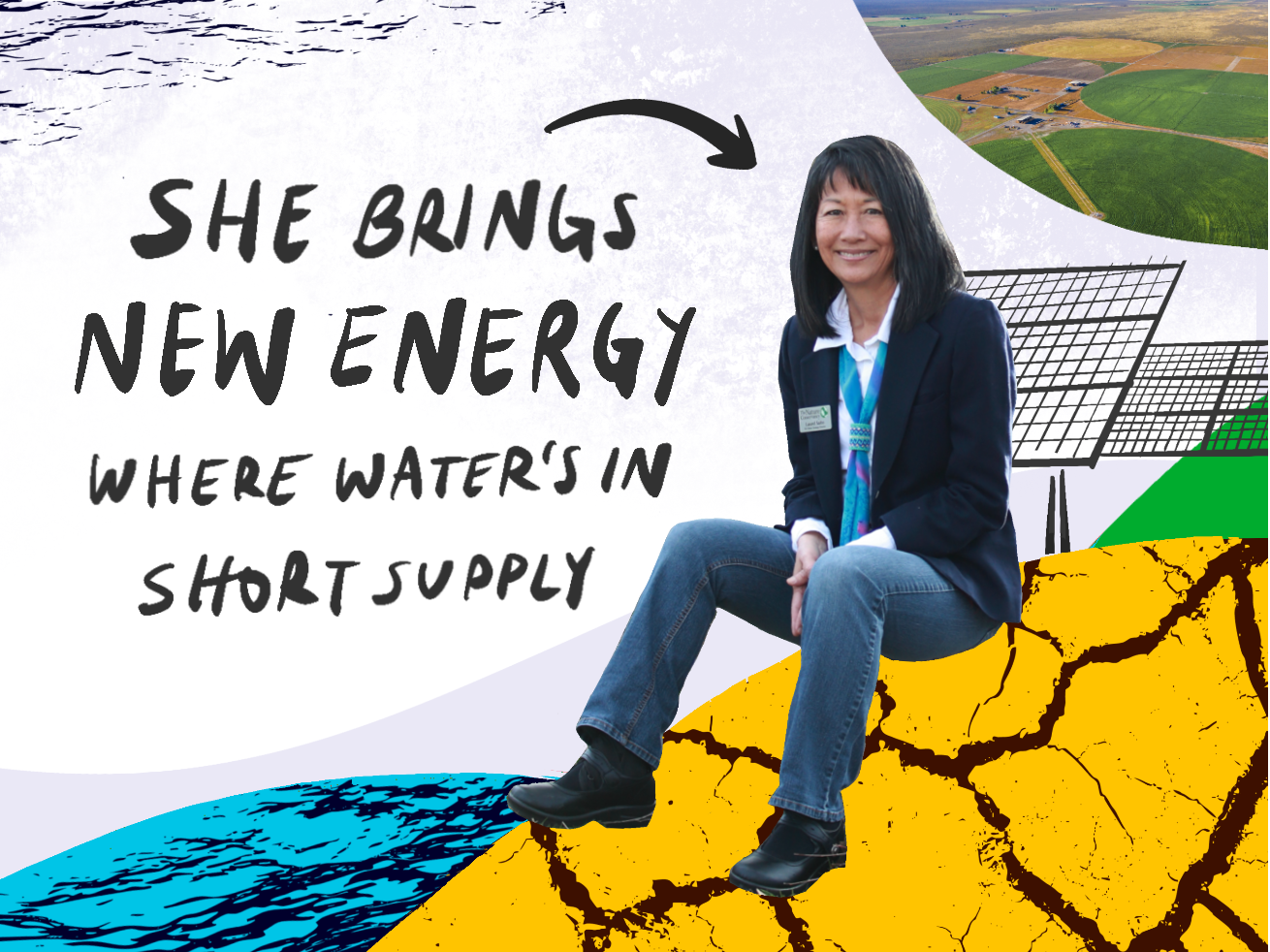
Look around a place like Nevada and it might seem like something’s missing. Not so many lakes. Or rivers. It’s rare to see a raincloud. Even so, if you’re like Laurel Saito, a water scientist at TNC who knows where to look, there’s water to be found.
“In arid regions like Nevada, the closest water to you is often a few feet beneath you rather than in a nearby lake or river,” she says.
The water hidden beneath your feet has a name. It’s called groundwater. Because groundwater is often where drinking water comes from, it’s what brings life to many towns and cities. Groundwater is what allows a grove of aspen trees, its roots capable of reaching deep into the soil, to flourish on a desert hillside. Farms rely on irrigation water pumped from the ground to grow the food we eat. Is it any wonder, then, that Laurel likes to call groundwater the “unsung hero of life on Earth?”
“Even though it’s hidden underground, groundwater sustains us and the natural places that we care about,” she adds.
In a place like Nevada—home to a sea of sagebrush and pine forests and animals like desert pupfish and leopard frogs—life has a way of adapting to limits. And where there’s water to be found, nature makes use of it.


We Can’t Save Nature Without You
Sign up to get news near you!
Water Brings Life
For more than half a century, agriculture has flourished in Nevada’s Diamond Valley—thanks to groundwater. There are ample sunshine and fertile soil, but what sustains these bustling farms are the deep groundwater wells that irrigate a vast patchwork of 130-acre circular fields. Since the 1950s, Diamond Valley’s hay crops—knee-high alfalfa and timothy grass—have had ready customers at distant dairy operations.
But farmers know it can’t go on like this. The water that brings these fields to life has dropped by an average of two feet per year over the past five decades, so new limits on water pumping for agriculture are now in place—with more to come. Meanwhile, projections are for more frequent and intense droughts.
Locally, what’s top of mind goes beyond water.
“Agriculture has really kept this county afloat as far as tax base and people for many decades,” says Jake Tibbitts, the Eureka County director of natural resources. “With the great declines in water use that we’re facing here, it’s a concern of what that’ll mean for the future of this community.”

The Solution that Comes Next
To lessen the economic impact that using less water will have for the region’s farms, Eureka County, Eureka Conservation District and TNC have been working together to explore a practical way forward.
What’s emerging is an innovative mashup of agriculture and solar panels—a pairing sometimes referred to as “agrivoltaics.” Solar panels yield energy from the sun and generate earnings for a landowner, supporting Nevada’s goal of 100% renewable energy by 2050. And, critically, solar panels deployed on the ground can offer shade and conserve life-giving moisture for grazing lands in a post-irrigation scenario.
The approach is explored in a research study that lists both Laurel and Jake among its authors. “Rethinking Water Scarcity, Energy, and Agriculture: Coupling Agrivoltaics With Addressing Groundwater Depletion,” published in the Journal of the American Water Resources Association, investigates a question that matters in Diamond Valley and beyond.
Farming in Nevada will contend with limits—it’s the driest of all 50 U.S. states. On the flip side, Nevada’s solar energy potential rates near the top. That makes this one more solution that deserves a day in the sun.
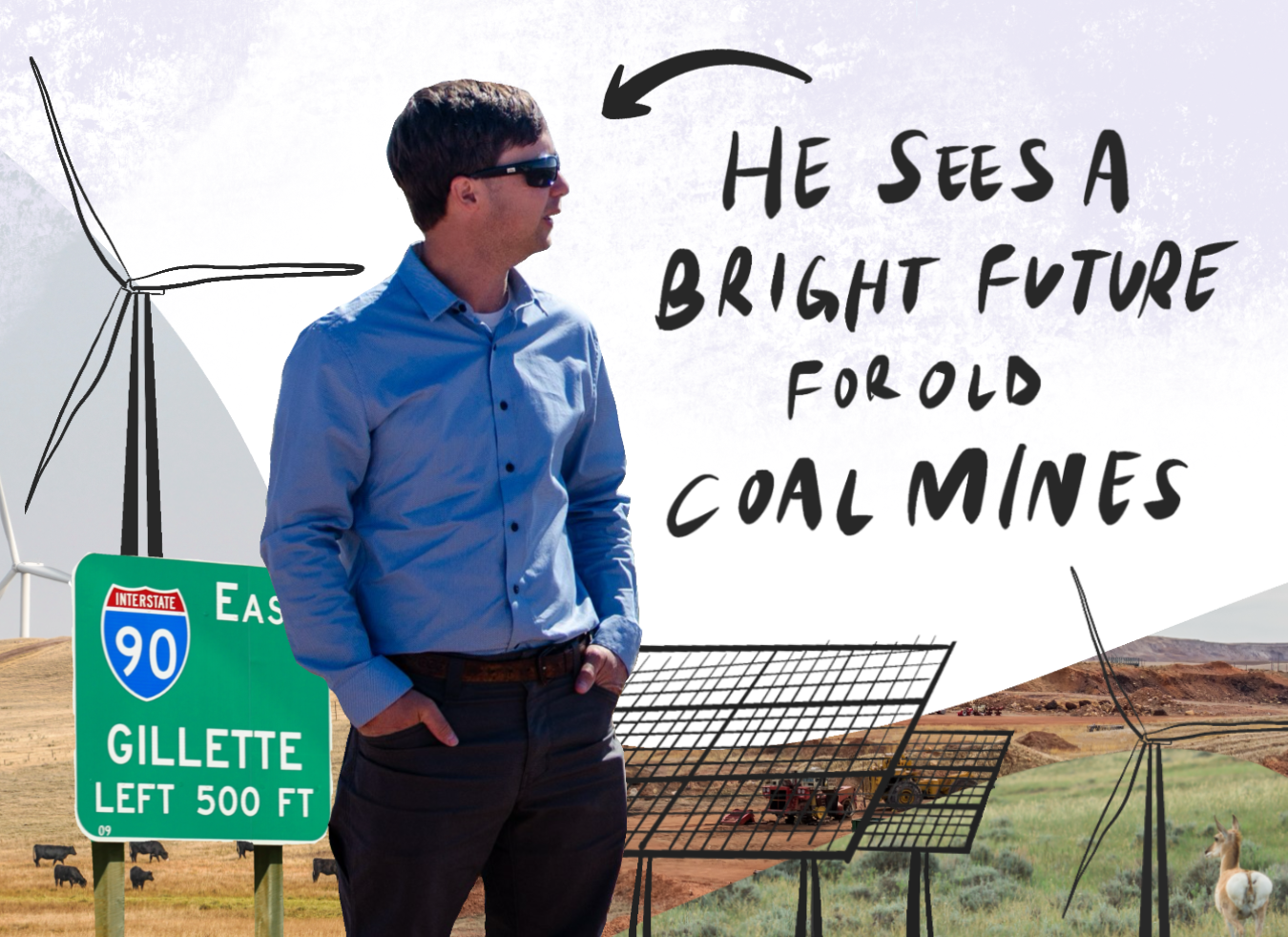
There are coal mines of one kind or another operating in 21 U.S. states. But of these, there’s just one heavyweight, and that’s Wyoming. Coal is king in the Powder River Basin, source of more than 40% of the nation’s output. That’s how it’s been since most Wyomingites were even born. Not forever, not at all, but it can feel that way.
Which is why the downturn in coal has felt like an emergency on a slow-burn for Gillette, a city of 33,000 known as “energy capital of the nation.”
Even though trains hauled off almost 1.7 million rail cars of Wyoming’s subbituminous coal to power plants in 26 states last year, that’s just half of what it was two decades ago. Wyoming still has the coal, that hasn’t changed. But the nation’s energy mix has: It’s cheaper to generate electricity from natural gas. Utilities aren’t building coal-fired power plants anymore. Plus, renewable energy like wind and solar, along with battery storage, is more economical than ever.
“The customers are just changing what they want,” says Justin Loyka, who directs the energy program for The Nature Conservancy in Wyoming.
That hasn’t gone unnoticed in coal country.
“There are hundreds of jobs that existed in 2009 that do not exist now,” says Justin, who, as a former mining engineer, knows the industry well.

What Comes Next
Living out a boom that teeters until it busts is how it often goes for towns like Gillette. Yet in this case, Justin says Wyoming’s energy economy needn’t go belly-up—instead, it can change. Former coal mines and their industrial footprints—buildings, roads, railroads, transmission lines—can be born anew as move-in-ready business parks. Renewable energy would be a practical part of the mix.
On this point, unlikely partners are pushing in the same direction, says Rusty Bell, CEO of Gillette’s Energy Capital Economic Development. Sustaining the local economy while easing the development pressure on Wyoming’s sweeping high plains is common ground.
“Let’s continue to keep industrializing the already industrialized areas instead of industrializing green space. It just makes a lot of sense,” he says. “Why not use these areas that already have the infrastructure?”
A transition to renewable energy puts less pressure on Wyoming’s high plains grasslands and sagebrush, habitat for greater sage grouse and herds of migratory pronghorn and mule deer.
It’s about caring for the land these animals need, and limiting pollution from fossil fuels and also limiting further warming from climate change.
“Being able to grapple with really big problems is the TNC superpower,” Justin says. “TNC looks at these problems top-down and then also goes and works bottom-up. That kind of engagement with large, thorny problems is super rare.”
In the West, working this shift isn’t a tabletop exercise. It’s about people who live and work in real places. The next big thing to fill coal mining’s footprint may not come from the ground—it could be found in new ways of working together.


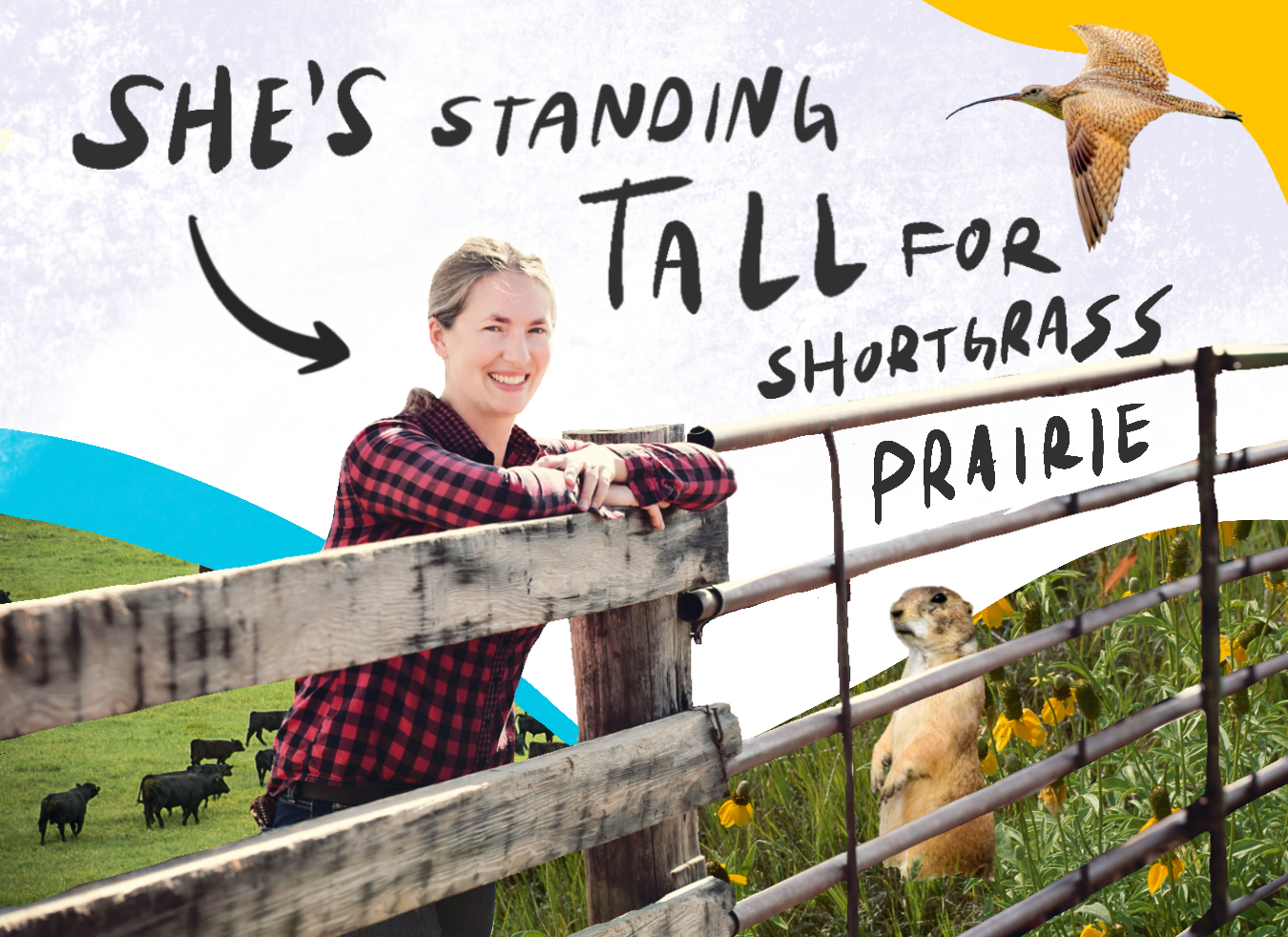
The best way to get a feel for Montana’s shortgrass prairie is to take a walk. Do it on a spring morning. Listen for the meadowlark’s warbling. And, if you can, try to take in all the grass. There’s bluebunch wheatgrass, needle-and-thread, little bluestem and plenty more, each one a species all its own.
This is home for rancher Laura Nowlin, who raises cattle here with her family. It’s calving season, with work to be done, but just now she’s catching her breath at the kitchen table.
“It’s pretty hard this time of year, when there’s new babies being born and the birds are coming back and the grass is growing, to not just kind of marvel at the miracle of it all,” she says.
Laura leads a local non-profit organization called Winnett Agricultural Community Enhancement and Sustainability, or ACES, and The Nature Conservancy has been a partner in its efforts since it launched 10 years ago.
“At the end of the day, our goal is keeping family ranchers on the land,” Laura says.
The group’s guiding question, the one that keeps them on track, Laura says, asks “How do we maintain and improve working lands for the benefit of livestock, people, and wildlife, and how do we do that together?”
The health of the grasslands means so much in the middle of Montana. There’s the way prairie grasses give nesting cover to wildlife like greater sage-grouse and many grassland songbirds.
When you look at bluebunch wheatgrass, the grass you can see above-ground is like the tip of an iceberg—most of the plant’s biomass is underground. In their deep roots, prairie grasses absorb and store carbon from the atmosphere. In this way, working ranches are part of a virtuous cycle: Grass provides a livelihood, and that healthy livelihood helps ensure grasslands aren’t lost to development—namely, plowed up for growing crops. It would be like losing a forest. Wildlife—mule deer, prairie dogs, burrowing owls and more—take a hit, too.


Laura says her organization came together at the grassroots to keep that from happening by supporting the community in every way they could. They first succeeded in getting locally raised beef in the school—home of the Winnett Rams. Their organization shares expertise in soil health, rangeland management and business strategy with ranching families. They’ve helped local ranchers replace old fences with wildlife-friendly fencing that allows animals like pronghorn to pass through unharmed and brought in livestock watering stations to ease pressure on streams and wetlands. The group has restored a historic storefront on Main Street and opened a coffee shop to create a community gathering place—with space enough for dancing partners to two-step. They created a day-care center and new affordable housing. A new community center brings people together, too. All of this means jobs and amenities in a rural place where every contribution from every person helps—the population of Petroleum County is just 500.
“They're building on each success. It’s just very inspiring,” says TNC’s Northern Great Plains director, Kelsey Molloy, who’s working with Winnett ACES to develop a grassbank to help ranchers and support healthy grasslands.
How do Laura and her neighbors make all this happen? It’s not any one project or any one person, Laura says. But there is one thing.
“It’s the mindset,” she says. “Fighting for something, as opposed to fighting against something. We've made a commitment to just be positive and to do things that are going to have a positive result.”
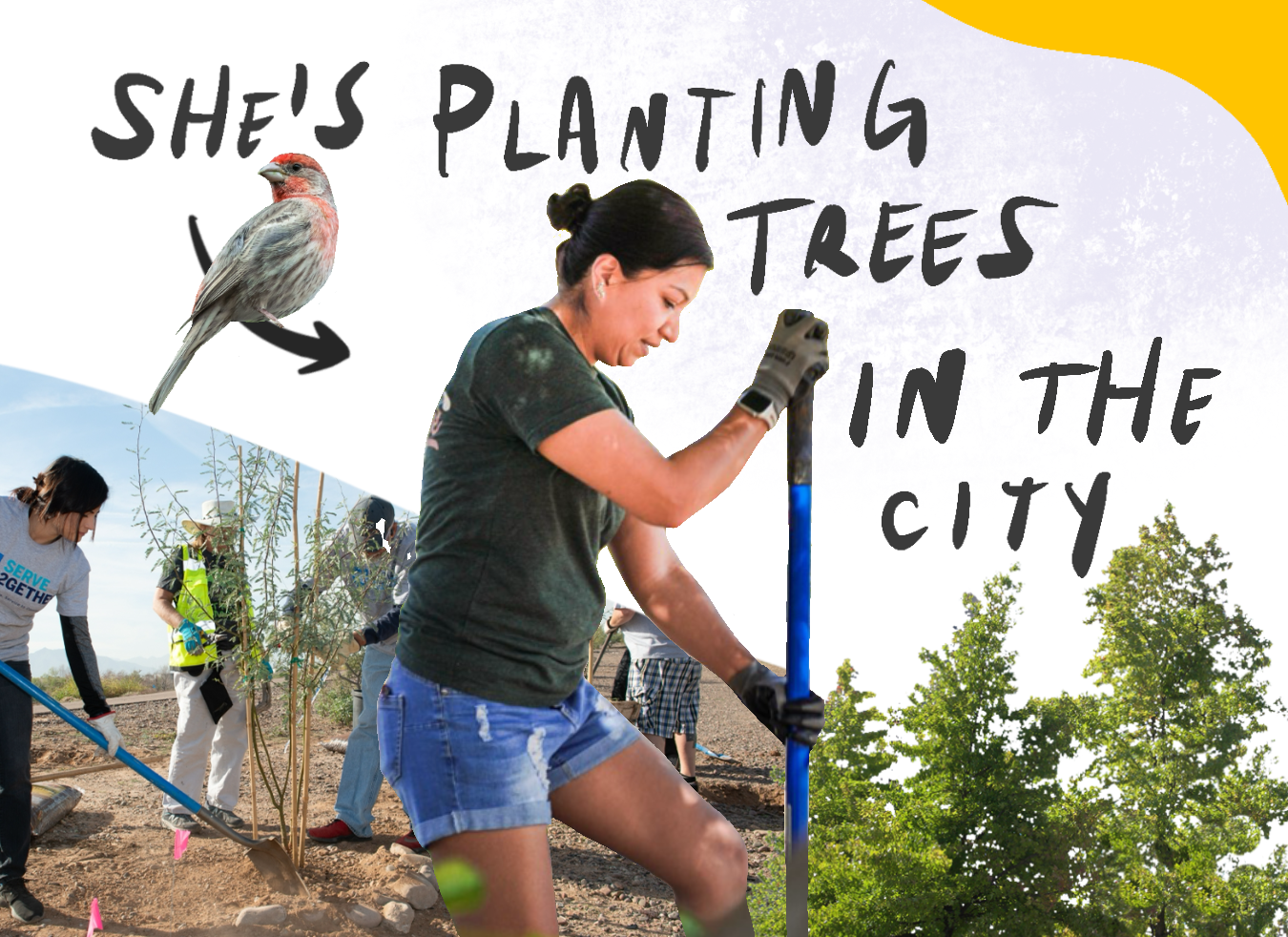
Diana Apresa grew up playing in a lush tangle of zucchini vines and plump watermelons in her family’s garden. There were flowers, too, and trees. But one tree, a weeping willow with a curtain of branches reaching to the ground, was her favorite. “Mi arbol,” a young Diana called it, and her family knew that inside its shaded veil is where she could often be found.
“It would just embrace you,” Diana says. “It was like my refuge.”
Today, Diana is raising two sons in Phoenix, Ariz., and in their home, trees are like family. A neighborhood community garden offers the same kind of lush paradise she knew as a girl. There are pomegranate and peach trees. Lemon trees, too—even the leaves have a fragrance, Diana says.
“I grew up with nature all around me,” Diana says, “and that’s what I wanted my kids to have.”
Diana loves trees so much she notes what’s missing when they’re absent. As a jogger, she notices when her route takes her along a city block where there are no trees to offer shade.
Phoenix is the hottest metropolitan area in the country—and getting hotter. On some days, there are neighborhoods that are as much as 13 degrees Fahrenheit warmer than others. The hottest neighborhoods have fewer trees and more pavement.


Helping Neighbors with Trees of their Own
When Diana learned of an opportunity to sign up for a program to ease the heat in Phoenix neighborhoods, with trees being part of the solution, it didn’t take long for her to enroll. Known as TNC’s Urban Heat Leadership Academy, it’s designed to equip community members with skills to advocate for more trees, cool walkable corridors and finding ways to use rainwater for trees in their neighborhoods.
“I was a little intimidated going into the Academy. I was not sure how I was going to fit in. But as we grew into the conversations and the different issues, we grew this community that was just very trusting,” Diana says.
Beyond the technical skills learned along the way, the resulting network of new relationships—more than 170 alumni strong—is proving to be a force for helping Phoenix neighborhoods.
“Our focus has been from the beginning and will continue to be: How do we help get trees and nature into the places that need it most so we can best support people who are most vulnerable to rising extreme heat,” says Amy Scoville-Weaver, who leads TNC in Arizona’s Healthy Cities Program.
Participants like Diana are proving to be great ambassadors for trees in the city. After completing the Academy, she launched a volunteer tree planting project of her own in a neighborhood along her running route. She led a group of seven to talk with people in the community about accepting the gift of a tree for their yard—trees would be planted and looked after for free.
“We literally went knocking on every single door in the neighborhood,” she says.
People agreed, and in the end, Diana’s volunteer crew planted 70 trees.
“When we did the tree planting, it was a long day, but it was so satisfying in the end,” Diana says. “If you go around in the afternoon, you’ll see people enjoying the shade of their trees.”
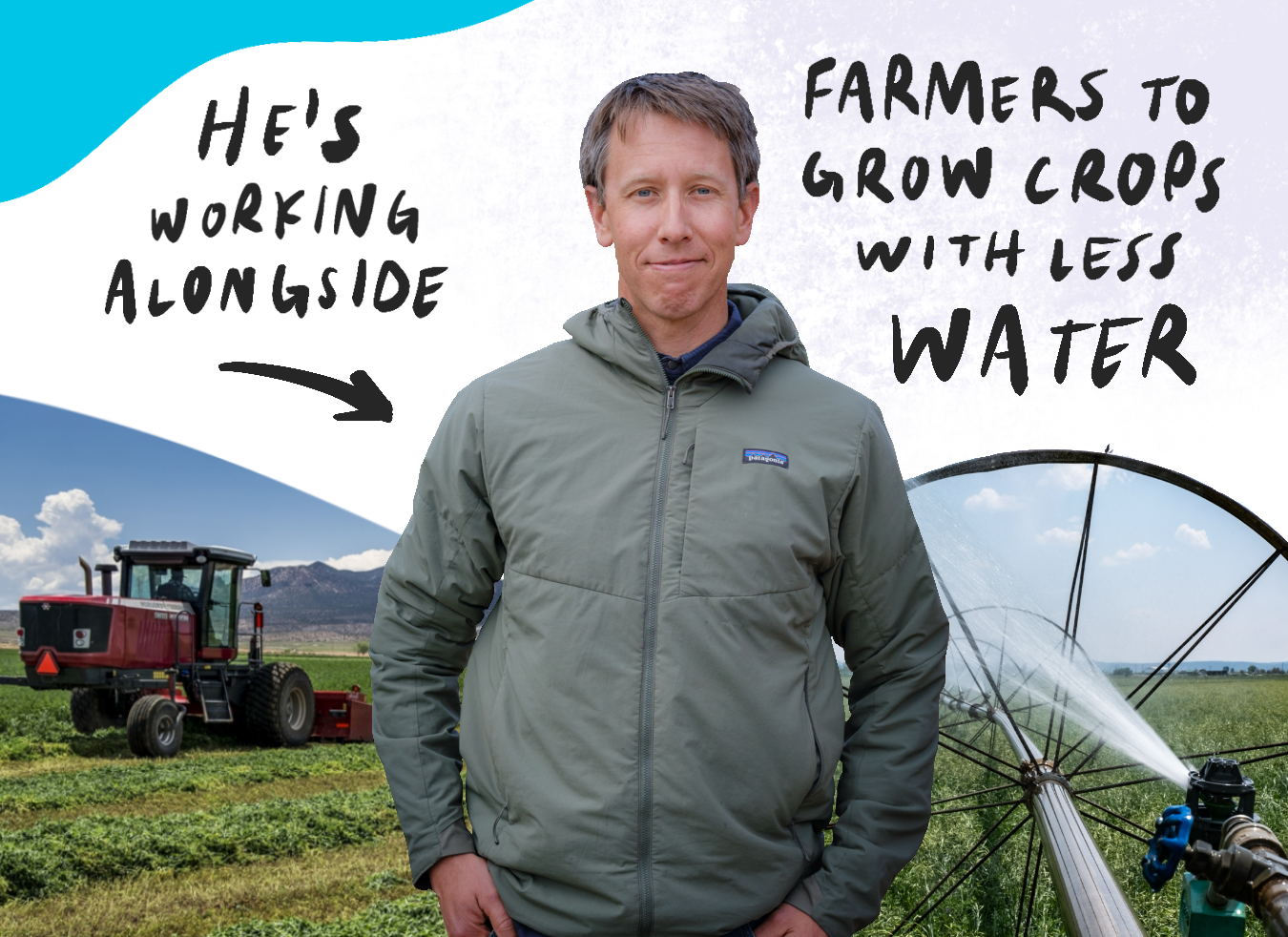
Rivers have always drawn him in. With only oars to guide his raft, Aaron Derwingson reads the water—watching currents, adjusting in real time. It’s like the mindset he brings to his work at The Nature Conservancy, where he works alongside farmers to help agriculture work in a more arid West.
There’s a reason flowing water demands so much of Aaron’s attention. Rivers bring something essential to farms, towns, wildlife and entire ecosystems. In the Colorado River basin, where Aaron works, more than 40 million people depend on the basin for their drinking water. Rainfall on its own isn’t enough to sustain crops, so farms and ranches supply water by other means. In fact, currently, more than 70% of the water drawn from the vast Colorado River system for human use goes to agriculture. But lasting drought shows there are limits to what the Colorado River can deliver.
“The Colorado River is already stretched beyond what it can reliably provide,” says Aaron, who directs water projects for TNC’s Colorado River Program.
For an entire region, the shift has been occurring over time. Agriculture, as a sector, is identifying ways of adapting.
“We’re going to have less and less. I think of it as the new normal,” says farmer Greg Peterson, who is also president of the Colorado Ag Water Alliance, a group representing farmers and ranchers reliant on irrigation water.


Next Era of Agriculture
There are more acres planted to alfalfa than any other crop in the Colorado River Basin. Farmers irrigate fields to grow alfalfa for cattle and dairy cows in the West and even beyond. It’s the region’s most established crop. But what if farmers could plant alternatives to alfalfa that yielded a healthy harvest while using less water?
To that end, TNC and partners like Greg’s farming organization and Colorado State University are overseeing field trials of two promising crops—kernza (a perennial grain with an appearance similar to wheat) and sainfoin (a nutritious and drought-tolerant plant related to beans and peas). These experiments are underway now on farms and TNC preserves with agricultural lands.
“It’s still early days,” Greg says. “There’s a lot left to do, but I think we’re off to a good start.”
Farmers are in the business of bringing crops to harvest year in and year out, and their success relies on a determination to make it work.
“The people who are in agriculture are some of the hardest working and most creative folks that I've had the privilege of working with. We need that knowledge,” Aaron says. “And then on the flip side, they need our support.”
TNC’s history of working alongside partners to clear obstacles and find win-win solutions often sparks the kind of collaborations that complex problems require. In this case, those partners are farmers and ranchers. Investments in practical steps now lay the groundwork for adapting in the future.
“No single solution will fix the Colorado River,” Aaron says. “But agriculture has to be part of the answer. Working with farmers to grow reliable crops with less water —that’s one way we start to adapt.”
Related Articles

Made of Salmon
Salmon are inextricably linked to our way of life, the health of our natural systems and communities across the West. Protecting them benefits much more than fish alone.

How Rivers Connect Us
The Nature Conservancy is taking action alongside communities to support rivers in need, finding new ways to build bridges and come together wherever we work.

On the Move
A podcast mini-series about wild animals, their amazing migrations and how people are finding ways to free them up from all the things standing in their way.