

Harnessing Nature’s Designs Along the Shore
Nature-based solutions can help reduce erosion and flooding to protect coastal infrastructure and communities.
Climate change and development impacts along Massachusetts’ coasts are widespread, from increased flooding and erosion during stronger storms, to rising sea levels. These factors decrease the resilience of coastal communities and ecosystems, making them more prone to disruptions and disasters. Helping coastal areas adapt to these challenges is a critical part of The Nature Conservancy in Massachusetts' strategy for addressing climate change and nature loss.
What are living shorelines?
Living shorelines are one tool that can strengthen estuary and coastal community resilience. These nature-based solutions are a set of approaches that mimic coastal habitats while incorporating some structural elements to slow waves and reduce flooding.


They take many forms, using vegetation or other living elements—primarily native plants and natural materials like woody debris and coconut coir fibers—alone or in combination with hard substances like oyster reefs and rocks to create structures that enhance and protect the coastline. From reef balls to oyster reef restorations, to salt marsh vegetation, there are a variety of approaches for living shorelines, mainly driven by environmental factors like wave energy, shoreline slope, and existing vegetation and soils.
This type of nature-based solution also results in several co-benefits, like providing area for recreation, storing stormwater and enhancing wildlife habitat.
Understanding local potential
Living shorelines have been implemented with success and are more prevalent in other parts of the United States compared to the Northeast. While they have been shown to help reduce the impacts of flooding and storm damage, there has been a lack of widespread adoption of this kind of shoreline stabilization.
TNC and partner organizations have been piloting and researching living shorelines in New England and beyond for years, in addition to codifying best practices across different shoreline types. Knowing what works allows us to replicate approaches and streamline the process.
Additionally, since many approaches to living shorelines require construction in nearshore areas, they trigger rigorous permitting processes, which are geared toward preventing negative environmental impacts. We’ve worked for several years on potential reforms for the permitting process for restoration efforts so that this kind of solution can be scaled more efficiently.
Listen to the story:
Travel to the coast and learn more about living shorelines in episode two of “Nature is the Solution.” It’s TNC in Massachusetts’ podcast showcasing nature’s role in securing a future where people and nature thrive.

Building Momentum for Stronger Shorelines
Achieving that vision of scaling living shorelines implementation requires getting information and resources in the right hands to facilitate the process. This is something TNC has been specifically working to address in recent years.
In spring 2025, TNC held a series of workshops at three living shorelines in Connecticut, Maine and Massachusetts, convening people from across the region for a knowledge exchange. The effort culminated in an online webinar that recapped key takeaways from the workshops, which attracted hundreds of attendees.
“To further this effort, we’re now working in partnership with the Northeast Regional Ocean Council (NROC) to provide training, increase planning capacity at the local level and jumpstart living shoreline projects throughout New England,” says Dan Goulart, coastal project manager for TNC in Massachusetts.
Living Shoreline Planning Series 2026
TNC and NROC are in the process of selecting 10 community applicants from across New England to receive training in coastal resilience planning and participate in developing concept designs for a location that would benefit from a living shoreline. This will enable communities to use proven nature-based approaches to protect people, infrastructure and wildlife habitat.
Learn More and Stay Tuned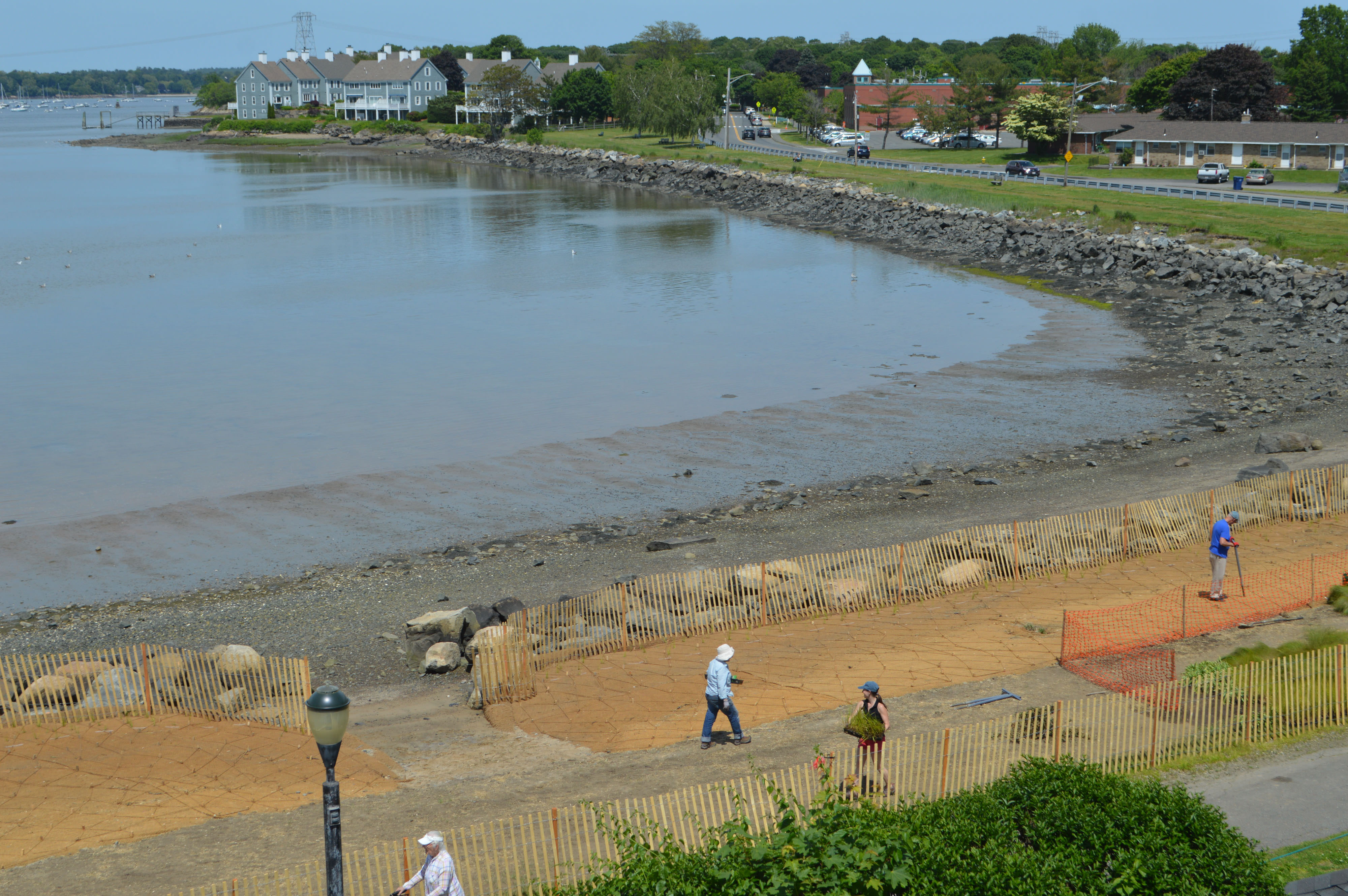
Shoreline Spotlight
Collins Cove, Salem
From 2018 to 2020, TNC managed a three-year project funded by the National Oceanic and Atmospheric Administration to grow understanding across New England of the effectiveness of living shorelines. These approaches—dune nourishment, bank stabilization and marsh restoration—are all nature-based solutions that primarily use a mix of sand or stones, native vegetation and biodegradable materials to protect the shoreline. 15 projects were installed throughout New England with state and local partners and then monitored to understand their efficacy.
In Salem in 2019, Salem Sound Coastwatch led a volunteer effort to plant 15,000 marsh grass plugs to restore a three-quarter-acre salt marsh along Salem’s Collins. In partnership with the city of Salem, Massachusetts Office of Coastal Zone Management and TNC, this planting formed a living shoreline in an effort to naturally address erosion and flooding over time.
“This is an ideal place,” says Barbara Warren, Executive Director of Salem Sound Coastwatch. “We had salt marsh trying to grow, but it was on gravel. We would get waves, and it would break apart. There’s also a very active bike and walking path next to the site. There’s great visibility—but the path was getting destroyed by the waves.”
Years later, the marsh grass is abundant and doing its job. The community frequents the path, biking, walking and enjoying this spot of coastal greenery next to town.
Hear more about this project and TNC’s larger effort to mainstream living shorelines in episode 2 of our Nature is the Solution podcast.


More Stories Like This

New England Living Shorelines
Learn about five New England projects that are models for nature-based methods of protecting our vulnerable coasts and coastal communities as we deal with the effects of a changing climate.

Proactive Relocation Away from Rising Waters
What can we do for Massachusetts communities on the front lines of flood risk to set them up for a safer, more resilient future?

Accelerating Adaptation: Nature-based Solutions
The promise and limitations of nature-based solutions in the race to adapt to increasing floods and droughts.