


2025 Oklahoma Impact Report
Explore the year's conservation successes with state director Mike Fuhr.
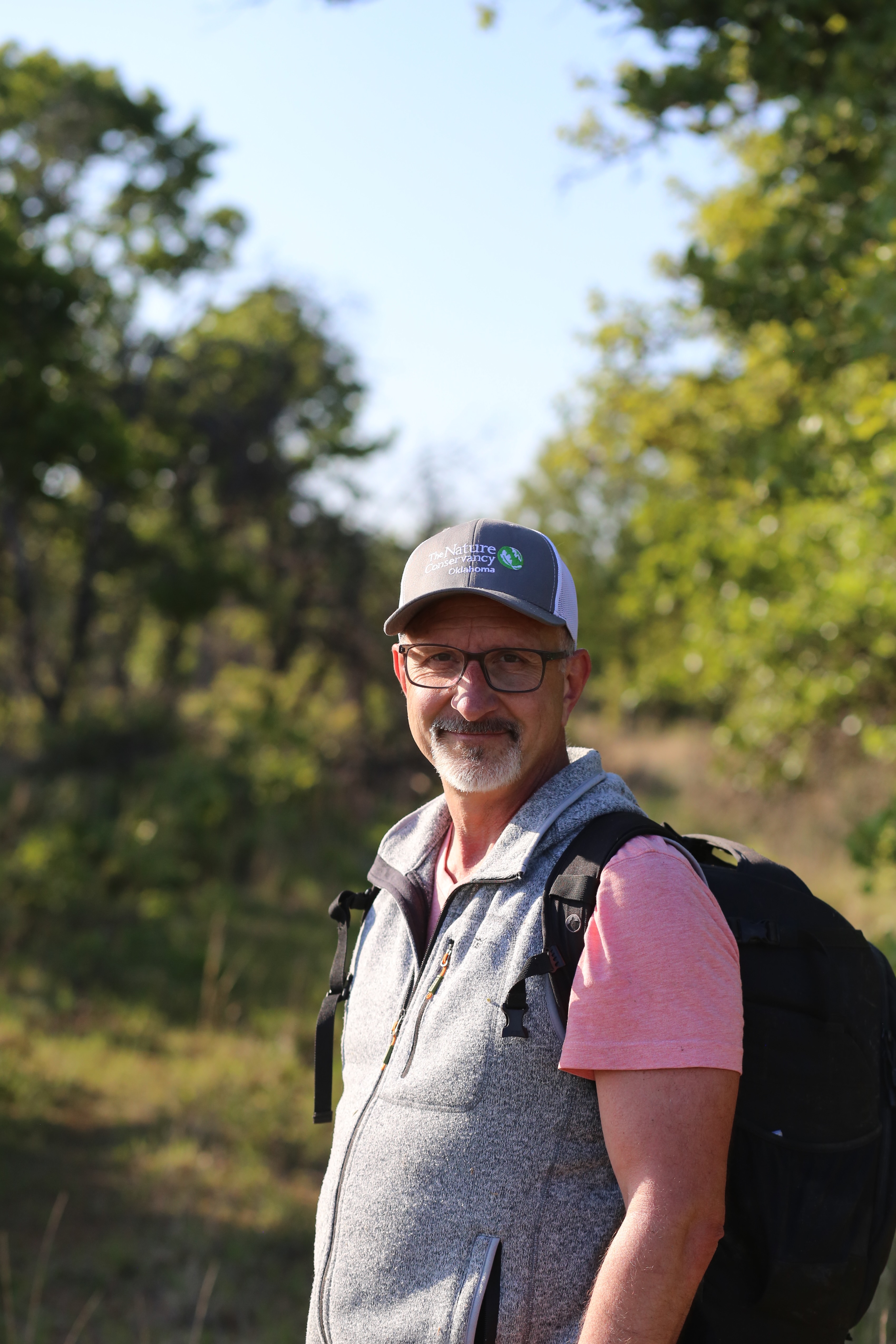
Letter from the Director
In closing out last year, we have much to celebrate! On behalf of our team, please accept my heartfelt gratitude for your continued support of Oklahoma’s lands, waters and wildlife. Thanks to your dedication, we’ve protected thousands of additional acres, deepened our commitment to volunteerism and community outreach and expanded our capacity for priority projects like prescribed fire, preserve infrastructure and critical partnerships.
This year, we said goodbye to two titans of conservation who made a forever impact in our great state: Neal McCaleb and John Nickel. A longtime public servant, family man and fierce advocate for the Chickasaw Nation, Neal McCaleb served as a TNC trustee from 2007-2024, during which time he helped establish the robust partnership between TNC and the Chickasaws, now focused on water, fire and land. This partnership has inspired other tribal partnerships across the state and beyond.
Lifetime trustee John Nickel and his family donated 14,000 acres of land overlooking the Illinois River. Dedicated in 2000, the J.T. Nickel Family Nature and Wildlife Preserve remains the largest privately protected conservation area in the Ozarks. In 2005, elk were reintroduced to the property, fulfilling a lifelong dream of John’s and further solidifying the preserve’s status as a haven for wildlife and accessible outdoor escape for visitors of all ages. The lives and legacies of these stalwart conservationists inspire us daily and will inspire others for generations. It was an honor to know them, and I hope you’ll join me in celebrating their myriad contributions here in Oklahoma and beyond.
Our Conservation team made major strides toward our ambitious 2030 goals, with the addition of Sand Creek Ranch–a 5,000-acre property in the Red Hills of Harper County–to our conservation portfolio in December of 2024. Located within the Southern High Plains, Sand Creek encompasses vast, untilled grasslands, and a perennial stream. We look forward to identifying species present and protecting this incredible place in perpetuity through a land protection agreement.
This was a year of novel discoveries and meaningful progress at Pearl Jackson Crosstimbers Preserve. In the spring of 2025, staff confirmed the presence of Geocarpon minimum–commonly known as Tiny Tim–on preserve grounds. This fragile forb represents a major discovery due to its federally protected status. Momentum is building on the Crosstimbers Preserve through a stewardship partnership with the Muscogee (Creek) Nation and through a growing number of volunteer opportunities.
I’m so pleased to share with you just how far your passion for nature has taken us over the past year through these and other successes. Thank you for your investment in Oklahoma’s wild places through your contributions to our work. You made the world a better place. We couldn’t do it without you!
Oklahoma at a Glance
-
134,956
Total acres that we have protected across our great state.
-
90,776
Acres owned & managed by TNC.
-
27,203
Acres of conservation easements and deed restrictions.
-
36,425
Acres of Prescribed Fire in 2025.
-
8
Ecoregions where we work.
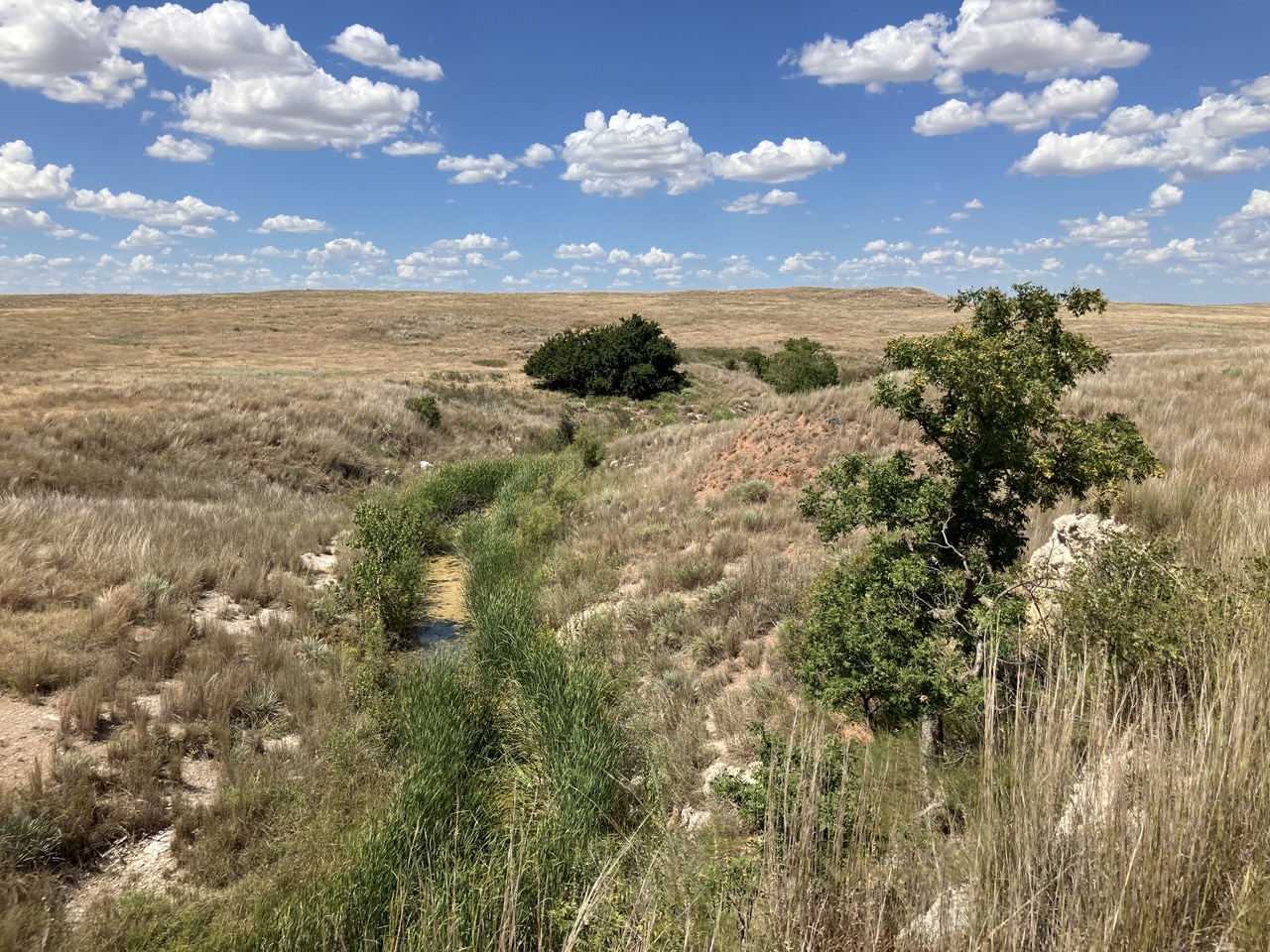
Welcome to Sand Creek Ranch
The Nature Conservancy in Oklahoma closed on the acquisition of Sand Creek Ranch in December 2024, a 5,000-acre property in the Red Hills of Harper County. A focal landscape within the Southern High Plains, a 71-million-acre region connecting five Great Plains states, Sand Creek Ranch encompasses untilled grasslands and perennial streams, providing habitat for a variety of species. With rolling hills, shallow canyons and gypsum outcrops—much like TNC’s Four Canyon Preserve—it provides an important linkage to other protected lands nearby.
The purchase of Sand Creek Ranch represents an opportunity to support our land protection goal of two million acres while securing an intact network of grasslands across the Southern High Plains. The region is rich in biodiversity and home to six endangered species, 10 threatened species and several grassland bird species experiencing population decline. Species observed on the property include Texas horned lizard, black-tailed jackrabbit, northern bobwhite, northern harrier, upland sandpiper and more.
“The Southern High Plains is one of the least protected, but most intact, regions of North America. These windy, short grass prairies are home to grassland birds, horned lizards, bears, and butterflies. Protecting the Sand Creek Ranch is a conservation milestone for Oklahoma, ensuring a home for creatures of the high plains," says Katie Gillies, Director of Conservation .
When it comes to natural climate solutions, this property represents a major victory for people and nature alike. Sand Creek Ranch has the potential to effectively capture and store tons of carbon underground, thanks to its vast and interconnected system of untilled native grasses. The Southern High Plains region is a carbon storage powerhouse, with an estimated sequestration potential of 12.5 million tons.
TNC intends to resell Sand Creek Ranch with a retained conservation easement where continued agricultural use of the property for grazing coexists with long-term conservation of the native plant habitat. This is what we refer to as a “Conservation Buyer Transaction” project.
2025 Conservation Champions
A Conservation Champion is an individual or organization whose passion for nature translates to action. Champions commit their time, resources and energy to a cause larger than any one entity. This year, TNC in Oklahoma is proud to announce The Oklahoma City Zoo, State Representative Mike Dobrinski, David and Better Turner, and Bill Alexander as our 2025 Conservation Champions.
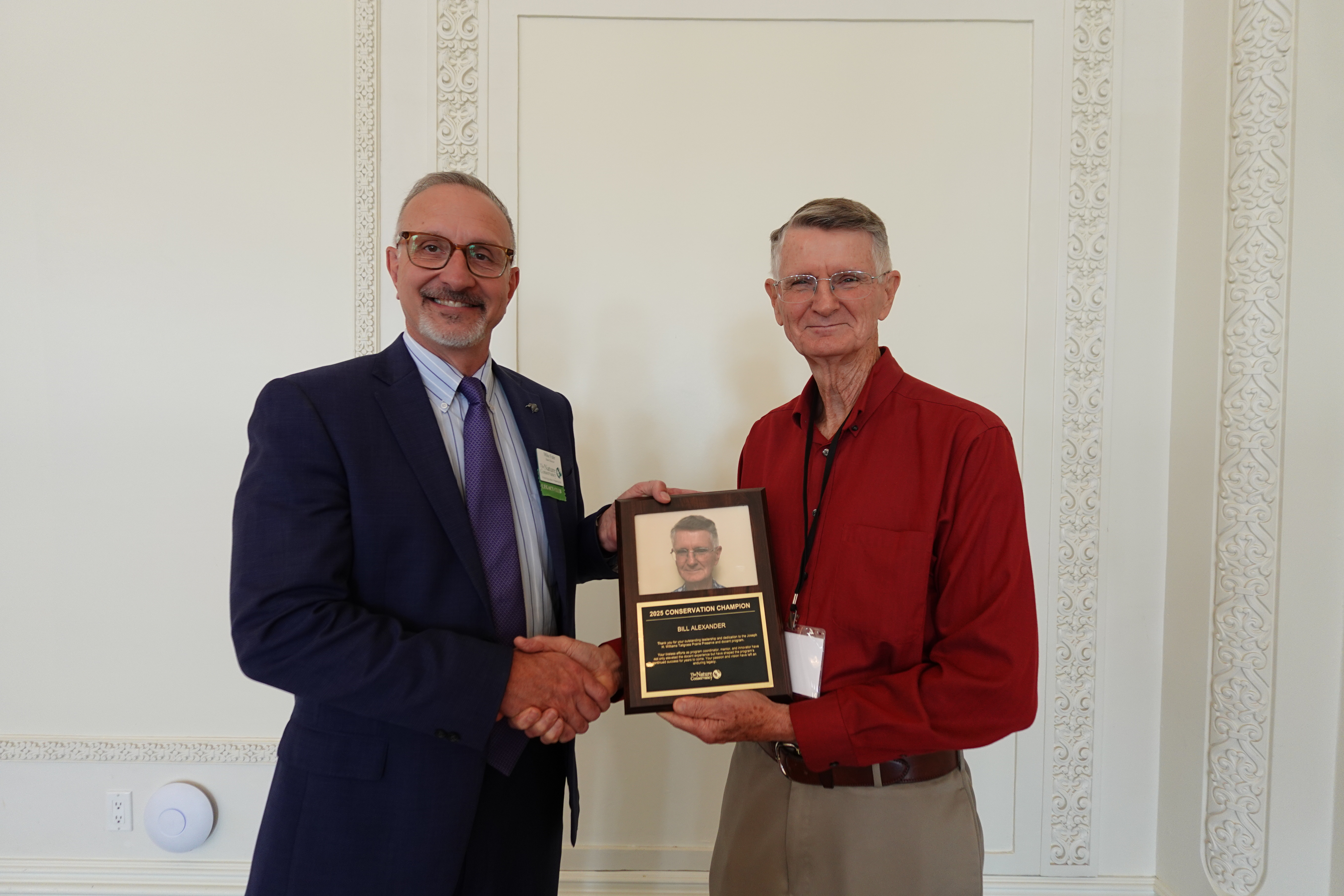
Bill Alexander
Bill Alexander was honored for his 12 years of service to the Joseph H. Williams Tallgrass Prairie Preserve docent program, including serving as program coordinator. Bill’s outstanding leadership and dedication have made a lasting impact on the preserve, our guests and our staff. His tireless efforts as program coordinator, mentor and innovator have elevated the docent experience and shaped the program’s continued success for years to come. His passion and vision have left an enduring legacy on the Pawhuska prairie and across the state.
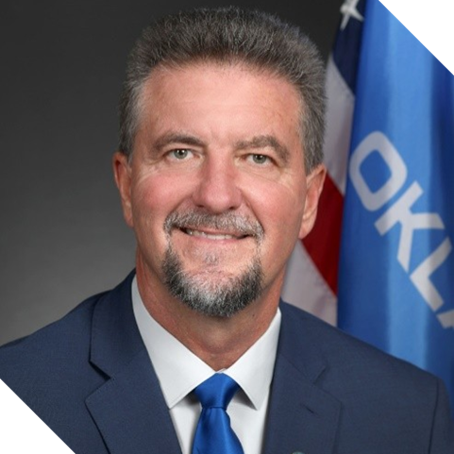
Rep. Mike Dobrinski
State Representative Mike Dobrinski’s commitment to advancing natural resource conservation and responsible renewable energy development in our state is second to none. The leadership he has shown in championing transformative policies will shape the future of our landscapes and communities. Rep. Dobrinski’s insight, dedication and ability to elevate natural resource protection through legislative action makes him a true champion for conservation in Oklahoma.
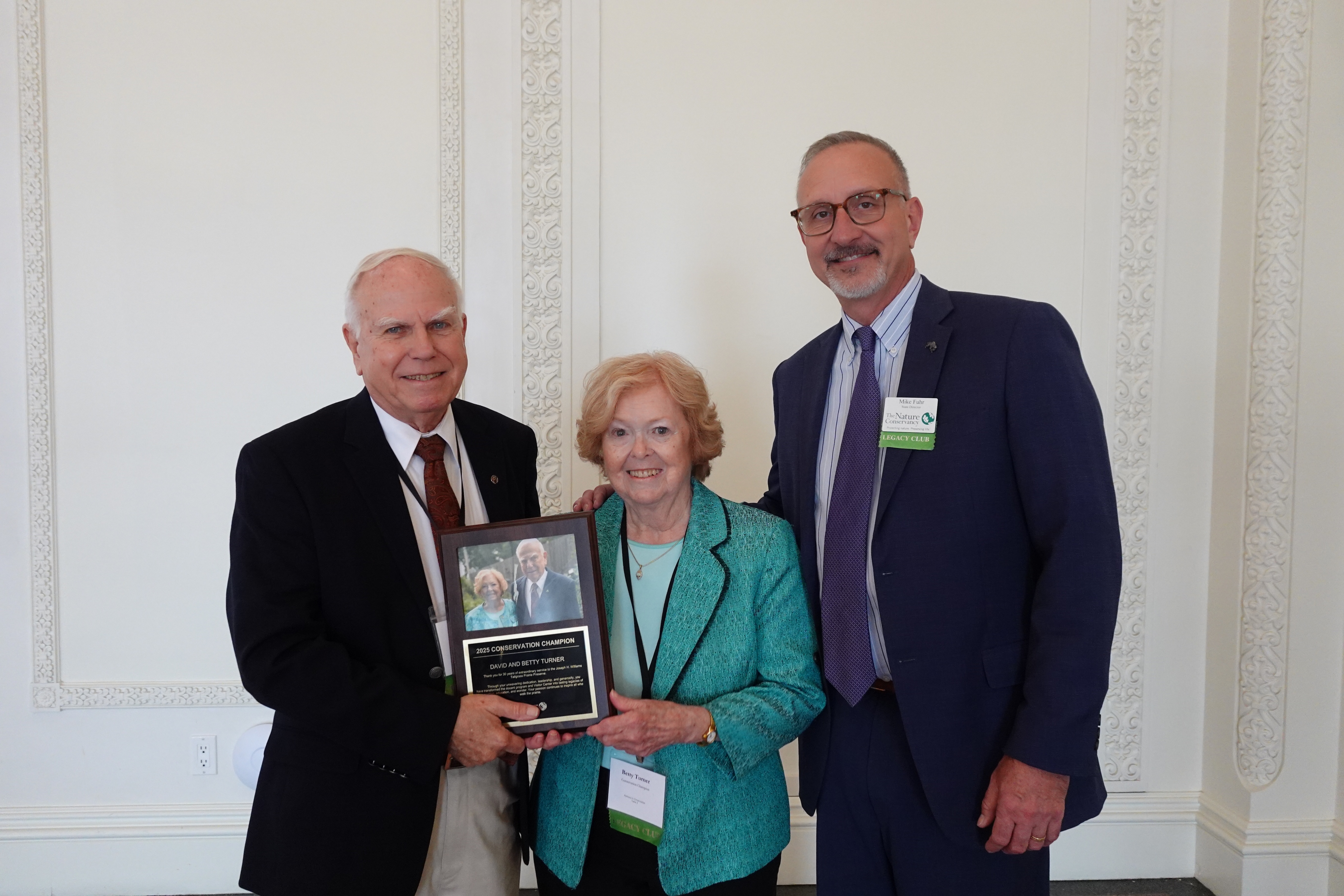
David and Betty Turner
David and Betty Turner have contributed decades of exemplary service to Oklahoma’s lands, waters and wildlife. The Turners have been devoted volunteers at the Joseph H. Williams Tallgrass Prairie Preserve for 30 years, educating generations through the docent program and leading the way on countless projects over the years. Through their unwavering dedication, leadership and generosity, they have transformed the docent program and the Visitor Center into lasting legacies of conservation, education and wonder!
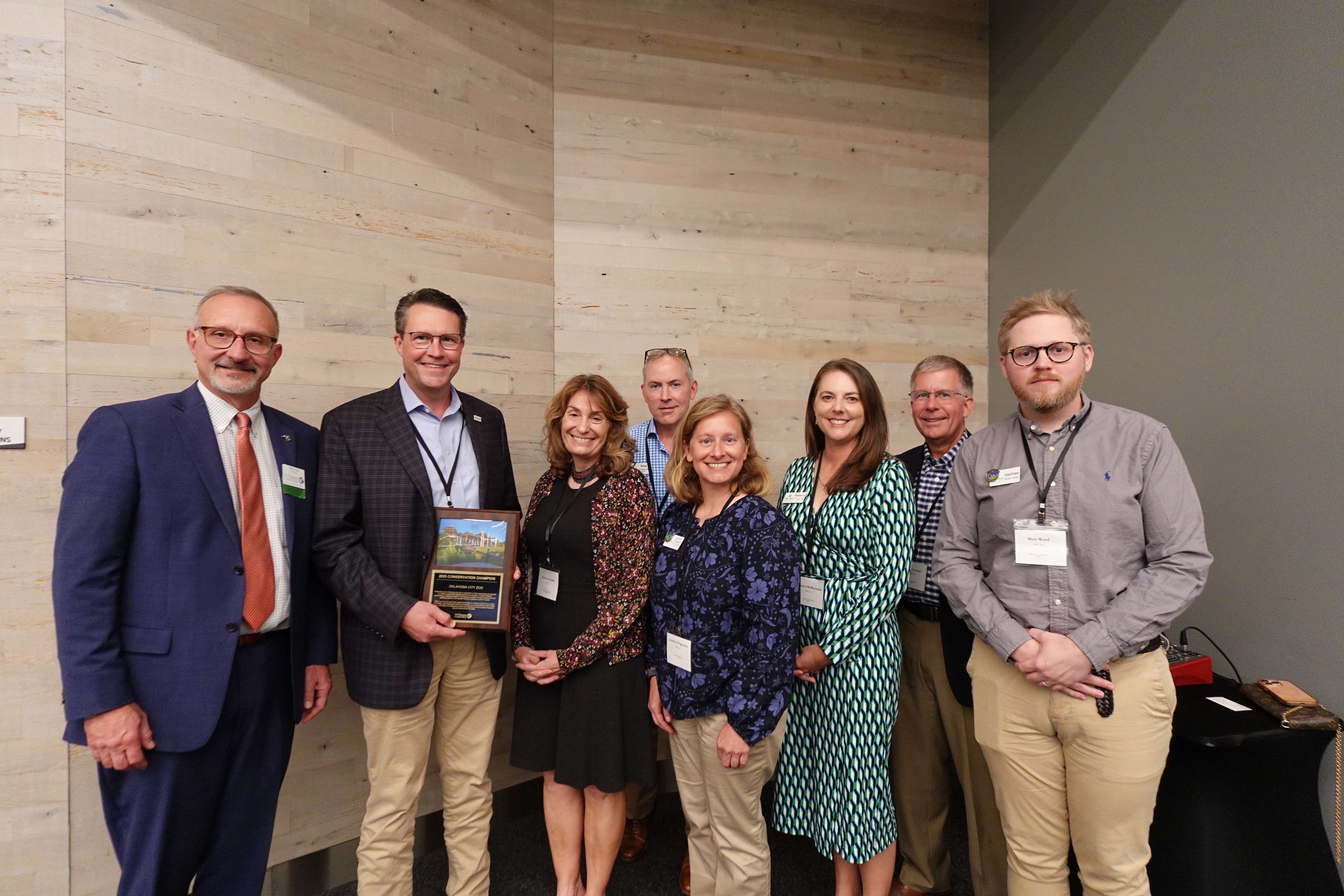
Oklahoma City Zoo
The Oklahoma City Zoo was recognized for its unwavering commitment to wildlife conservation across Oklahoma and beyond. Through impactful partnerships, innovative research and generous support, the Zoo has championed species protection and inspired millions of people to care for nature. We’re grateful to the Zoo and its team for their continued support and efforts to conserve Oklahoma’s unique biodiversity, from endangered bats and butterflies to bees and black bears. Their consistent leadership has catalyzed powerful partnerships and conserved species big and small across the state.
Collaboration for Conservation
For The Nature Conservancy in Oklahoma, volunteers are a force multiplier, enabling the organization to do more with limited resources while deepening community ties. Outreach helps us build bridges and is the key to transforming passive supporters into active protectors of Oklahoma’s natural resources.

Oklahoma’s biodiverse ecoregions require constant stewardship—from prairie restoration to bat and butterfly monitoring. Volunteers help maintain trails, remove invasive species, support biological surveys and so much more! A volunteer program tailored to Oklahoma’s unique landscapes fosters local pride and deepens conservation efforts. Similarly, local outreach creates new and meaningful relationships with individuals, TNC constituents and corporations – ultimately building more allies for nature.
TNC in Oklahoma Volunteer Program Goals
- Cost-effective support: volunteers provide critical manpower and reduce operational costs, allowing funds to be allocated elsewhere.
- Expanded capacity: with more hands in the field, we can scale up restoration projects, trail maintenance, species monitoring and preserve management.
- Skill diversification: volunteers bring expertise in everything from ecology to photography to carpentry, enriching the organization’s capabilities.
- Community ownership and bonds: when people contribute their time, they feel invested in the mission. Volunteers often become long-term advocates and donors.
If you’re interested in volunteering or partnership at outreach events, please contact Bridget at bridget.wunsch@tnc.org.
A Lasting Legacy on the Prairie
Tucked away in northern Oklahoma, and surprisingly unknown to many people, sits the largest protected piece of tallgrass prairie left on earth.
In 1989, a fledgling chapter of The Nature Conservancy took a gigantic leap of faith and turned a dream to conserve a significant piece of tallgrass prairie into concrete reality. “It’s pretty amazing that this happened,” recalled Harvey Payne, Tallgrass Prairie Preserve Community Relations Coordinator. “A lot of people never thought we’d get to see something like this. And now we have a 40,000 acre preserve with nearly 2,500 bison and a restored tallgrass prairie ecosystem.”

The significance and unique landscape of the Joseph H. Williams Tallgrass Prairie Preserve have continued to inspire others. Ten years ago, Delores and Jerry Etter were reintroduced to the magic of the prairie while on a tour with Harvey. Growing up in nearby Shidler, Delores knew the history of the area and small surrounding towns, but it wasn’t until that tour and subsequent visits that it began to hold new meaning. “I never really appreciated the beauty of the prairie until I went back and spent some time on the preserve,” says Delores. “At first glance, you may not see it, but as you spend time, you begin to see all the uniqueness.”
Quote: Harvey Payne
Delores and Jerry are truly conservation champions of the Tallgrass Prairie Preserve. Their generosity and love of the prairie have enabled us to purchase a critical inholding, make much needed improvements to the Preserve’s infrastructure and much more.
Growing up in Tulsa, Jerry got to know the prairie through Delores. It’s the only place he’s ever seen that has returned to its original state. Combined with the bison, cultural significance and the natural beauty of the land itself, the preserve is one of a kind. All of this uniqueness makes the Etters passionate about being part of the preserve and ensuring its stewarded for generations to come. “We want to be part of the preserve, not only because of our physical connection to the area but also because the cultural story the land tells, you really feel that sense of history – it takes you back in time,” said Jerry.
Since that initial visit, the Etters have shown unwavering dedication to the Joseph H. Williams Tallgrass Prairie Preserve and supported a variety of projects, including fencing upgrades, critical pond cleanup and a new multi-use drone for aerial imagery. They often ask Harvey and Bob Hamilton to send a list of what projects they’d like to see funding for. After the annual bison roundup in November 2025, work begins on the Etter’s new funding project, which will focus on corral and pen upgrades to ensure more safety for both the cowboys and bison.
Preserving Tallgrass Prairie Research for Future Generations
As one of the world’s most valuable ecosystems, the Tallgrass Prairie Preserve has long been an excellent area for research. With this in mind, and as a former professor, Delores began to think about how to connect their funding work with research projects. Five years ago, they established the Delores and Jerry Etter Graduate Research Scholarship Fund to support students seeking master’s and doctoral degrees while working on research related to the preserve. Most recently, they developed a faculty fellowship for long-term tallgrass prairie research. This combination of support for graduate and faculty research ensures future generations will know and love the prairie for decades to come.
“We wanted to provide a faculty member with four years of funding to really help with their research, including a salary stipend and discretionary funds. What can be done in one year is important but to see true trends four years of research is necessary. Dr. Chris Zou at Oklahoma State University is our first recipient of the faculty fellowship, and we’re looking forward to meeting him,” says Delores and Jerry Etter.
The Etters enjoy funding projects with visible, direct impacts. The scholarship and faculty fellowship programs do just that and showcase nearly everything the prairie ecosystem has to offer—from range and fire management projects, to research on dung beetles, grasshoppers and butterflies. Through these myriad projects, Delores and Jerry have seen and learned so much about flora and fauna on the preserve. True champions of the prairie, their active support and dedication to ongoing research make them strong ambassadors of meaningful conservation and TNC’s mission.
2025 Policy Update
Policy makes conservation and climate action possible. It is an essential strategy for reaching our 2030 goals.
In 2025, The Nature Conservancy in Oklahoma was actively involved in championing several pieces of legislation and took more direct action to support bills essential to promoting climate solutions, water sustainability and clean energy, in addition to defending public resources.

In the legislature, we supported three bills. HB 1588 and SB 91 were legislation designed to institute a water quality study and clean water action plan for the Spring Creek watershed, a priority watershed in the Ozark Interior Highlands in Northeast Oklahoma. The third bill, HB 2157, was a measure designed to create an agrivoltaics advisory body that would make policy recommendations to the Oklahoma legislature and Congressional Delegation.
State Appropriations
TNC also partnered with others in helping to secure an additional $2 million for woody invasive species control. These funds will be available for work statewide and have been combined with over $3 million in base funding at the Oklahoma Conservation Commission. This results in over $5 million in funding to control woody invasive species across the state in 2026.
Our decades-old, proven approach to policy will guide us—remaining nonpartisan, grounded in science, open to diverse viewpoints, engaging with communities, staying true to our values and leveraging our extensive networks.
Download
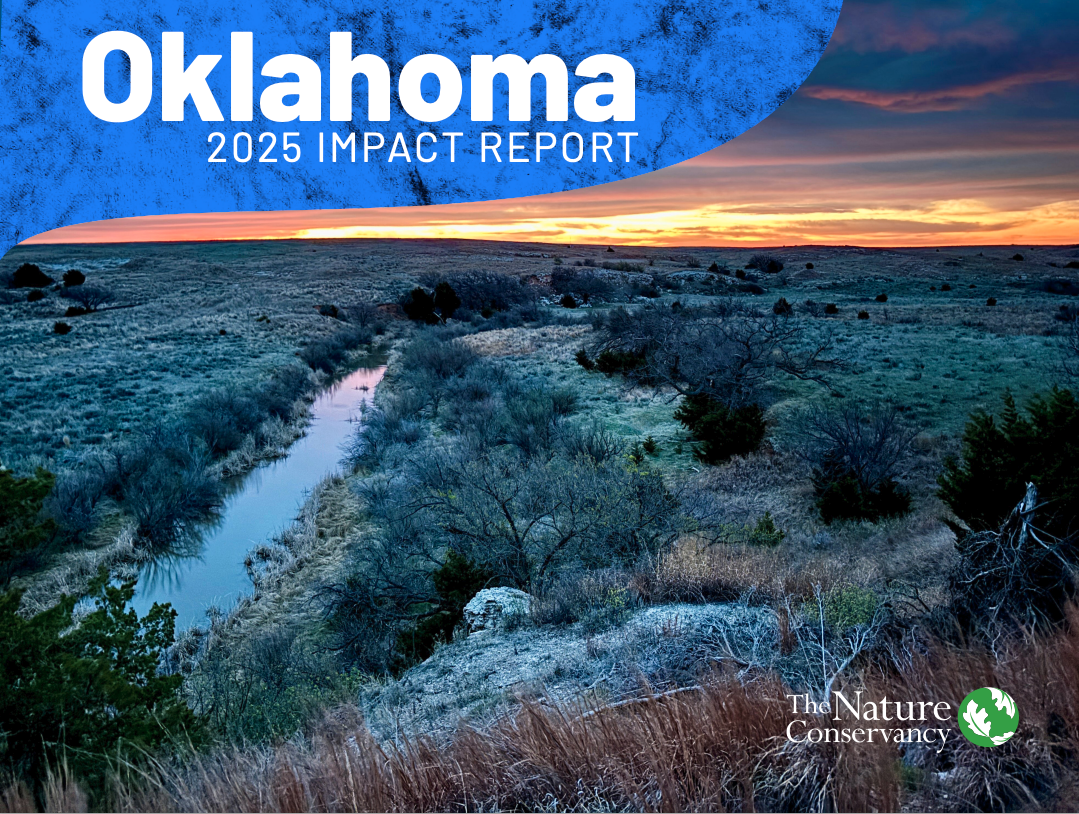
There's more to explore! Download the full report to see conservation successes from the past year.
Download Support Our WorkStay in the Know!
Sign up here to receive email updates from The Nature Conservancy in Oklahoma.
