


Costa Rica Where TNC’s work in the region began. © Sergio Pucci/TNC

Corcovado: The First Seed
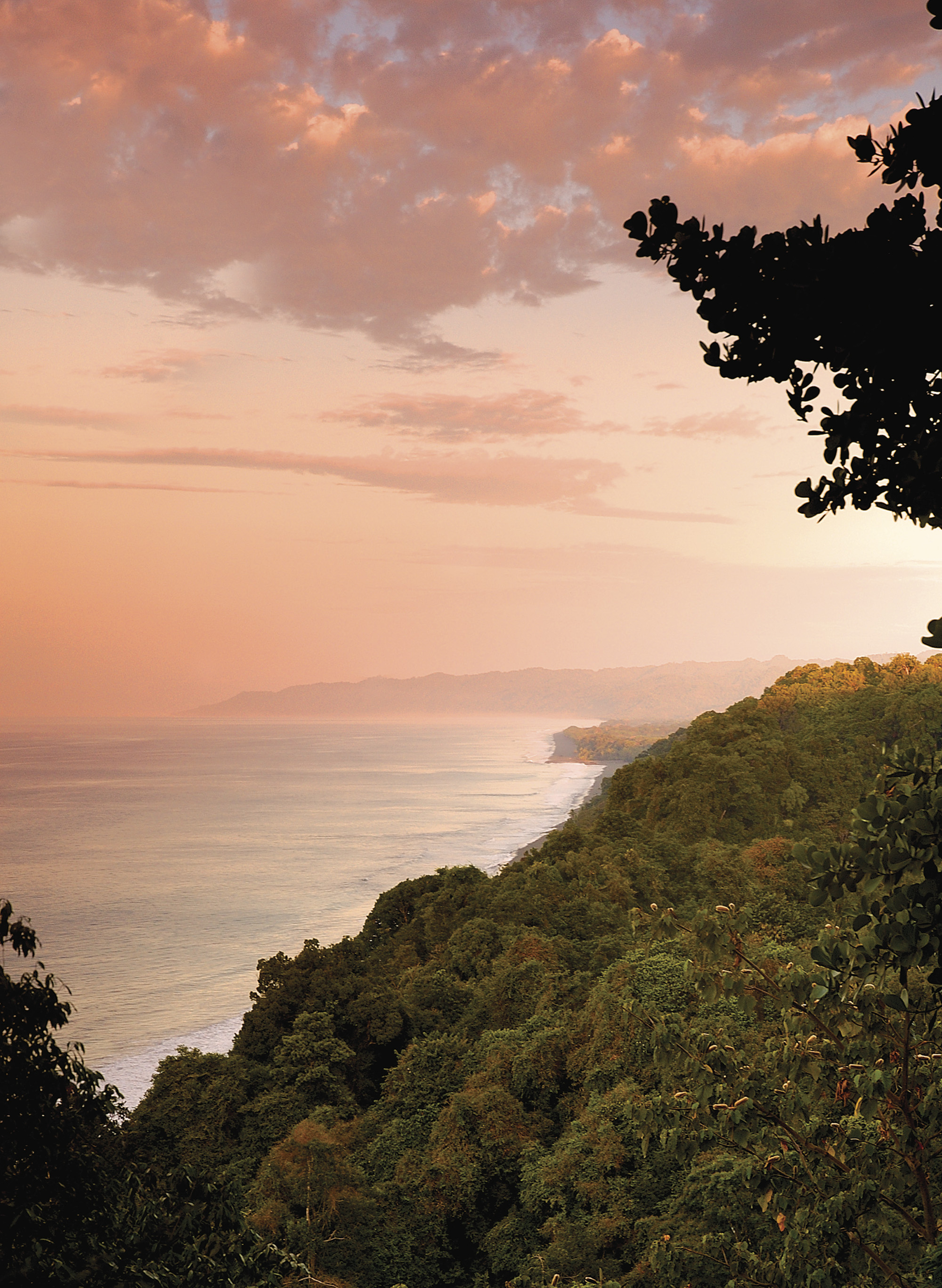
In the 1970s, venturing into the tropical rainforest of Costa Rica’s Osa Peninsula was like stepping into a world unlike any other, one so extraordinary that even the most experienced naturalists struggled to describe it.
“No written description . . . can begin to convey to the reader a true idea of the structural magnificence and incredible biological variety, or of the wealth of primal sights, smells, and sounds to be experienced by the visitor to these virgin communities in the Corcovado Basin,” wrote Dr. Joseph Tosi of the Tropical Science Center in a report to then Costa Rican President Daniel Oduber Quirós, later published in The Nature Conservancy News (Winter Edition 1976).
Yet his admiration came with a warning, “Only with major and immediate support will the opportunity remain for future generations.”
By that time, mining and agriculture were already affecting the area, and the response to the naturalists' calls came swiftly. In 1975, the Government of Costa Rica, with the support of The Nature Conservancy (TNC) and the World Wildlife Fund (WWF), officially established Corcovado National Park. The milestone marked TNC’s first major conservation achievement outside the United States since its founding in 1951. The vision of protecting one of the world's most important biodiversity corridors became a reality.
“Parks in Peril”
From its earliest years in the region, TNC embraced a visionary approach centered on strengthening local organizations and building long-term conservation capacity. Guided by this philosophy, the Parks in Peril program launched in the early 1990s with support from the United States Agency for International Development.
The initiative became the first program through which TNC scaled its conservation impact across Latin America, evolving from a site-based approach to a broader model focused on systems and alliances. It also laid the foundation for the nine country programs that TNC operates today across the region.
At that time, the challenge was to move from having areas defined on paper, so called “paper parks” that didn’t have any protection or management , to functioning parks. To address this gap, TNC developed a scorecard built around four key dimensions: strategic planning, basic protection and management activities (such as ranger programs and infrastructure), sustainable and diversified financing mechanisms, and the degree of community engagement, local benefits, and public support for protected areas.
Early years of "Parks in Peril" in Mexico
Mexico became the first geography where the program was implemented, including the Ría Celestún and Ría Lagartos Biosphere Reserves on the Yucatán Peninsula; El Triunfo, El Ocote, and La Encrucijada in Chiapas; Calakmul and Sian Ka’an in the Maya Forest; and El Pinacate and the Gran Desierto de Altar in Sonora, along the Arizona border.
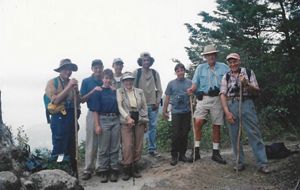
Visit to El Triunfo: Members of TNC New York visit the El Triunfo Biosphere Reserve in Chiapas. © Cristina Lasch / TNC
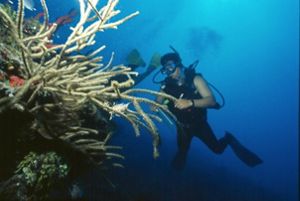
Mesoamerican Reef: Sian Ka'an features 120 kilometers of coastline, which are part of this significant coral reef. © TNC Mexico
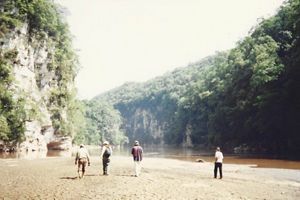
The Ocote: The La Venta River, which features impressive geological formations, runs through the Selva El Ocote Biosphere Reserve. © Cristina Lasch/TNC
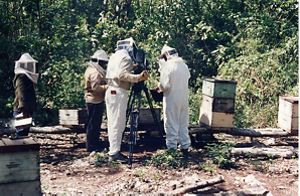
Calakmul: The Calakmul Biosphere Reserve contains the largest tropical forest reserve in Mexico, and beekeeping contributes to its conservation. © TNC Mexico
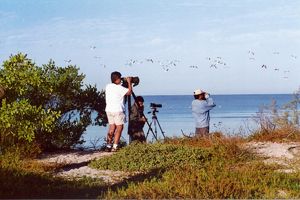
Training of local guides: In Celestún, TNC and its partners supported the training of bilingual guides for birdwatching and the promotion of conservation. © María Andrade
In Mexico, we realized that many of these polygons drawn on maps were actually private lands, and, in many cases, community-owned lands. We had to understand the needs of local people, work closely with our local partners, and start talking about creating incentives for conservation.
The tools and methodologies developed and tested by TNC and its partners through Parks in Peril became part of the foundation for what is now known as Conservation by Design, and, more broadly, the Conservation Standards, the adaptive management framework used today by TNC and conservation organizations worldwide.
We took a number of parks that existed only on paper and made them durable. But durability is not simply about making things resilient. It is about people and their commitment across generations.
Excerpts from the 1990's annual report of The Nature Conservancy.

We worked side by side with government officials and local organizations to understand and tackle the region’s most pressing conservation challenges.
Scaling Conservation Across Latin America
From its earliest years, TNC's work in Latin America demonstrated that protecting individual protected areas was not enough. Conservation needed to happen at landscape scale. It also became clear that no single organization can succeed alone. Lasting conservation depends on governments, Indigenous Peoples, community leaders, scientists and academic institutions, farmers, fishers, businesses, donors, conservation organizations, and future generations. It is fundamentally a co-creation effort.
The idea was never for TNC to have a strong presence itself, but rather to strengthen local conservation organizations. Across Latin America, the work evolved from being focused on specific sites to working through systemic partnerships.
By 2007, Parks in Peril had helped protect 45 parks and reserves spanning 44.8 million acres across 18 Latin American countries through partnerships with more than 200 organizations. Just as importantly, it strengthened protected area systems across the region, creating benefits that extended well beyond individual sites.
From Parks in Peril to Effective Conservation


TNC broadened the conservation movement to private and communal lands by developing legal frameworks, strengthening civil society organizations as land trusts and land managers, and supporting the implementation of pioneering land conservation agreements.
The initiative also supported the development of debt-for-nature swaps, sustainable management and use of biodiversity resources, conservation payment and compensation systems, and the establishment of conservation trust funds in 12 countries. These funds provide resources for national parks and other protected areas, while also supporting community groups and organizations working to conserve biodiversity and promote more sustainable use of natural resources.
Parks in Peril ended in 2007, but its legacy lives on. Those of us who were trained and went on to train others now lead organizations and protected area agencies across Latin America or serve in governments, helping shape decisions.
A Legacy That Endures
Today, more than half a century after the creation of Corcovado National Park, Felipe Carazo, who served as Project Manager for the La Amistad International Park and led TNC Costa Rica’s Conservation Strategy until 2012, reflects from his desk at the Tropical Forest Alliance in New York on the momentum of that first generation of scientists to conserve the world's most biodiverse places for future generations: us and our families.
"In conservation, the best indicators are the things that have become internalized. In Costa Rica, younger generations deeply embrace the legacy of Corcovado. They value their natural capital, understand that it is something worth protecting, and cannot imagine it any other way," says Carazo. He adds: "That legacy is not a blank check. It must be renewed with new generations and adapted to today’s challenges."


TNC understands that durable impact is dynamic and requires continuous adaptation. In recent years, the organization has focused its efforts on strategic ecosystems across Latin America due to their exceptional natural, cultural, and economic value, as well as their critical habitats: the Amazon, Cerrado, Atlantic Forest, Humboldt Current, Gran Chaco, Orinoquía, Patagonia, Maya Forest, and the Mesoamerican Reef.
As TNC celebrates its 75th anniversary, building on more than four decades of work in Latin America, we celebrate the seeds of collective action that made our impact in the region possible. Driven by a shared vision and locally generated innovations, we have helped inspire conservation solutions that are now creating impact on a global scale.

Latin America demonstrates that lasting conservation is possible. More than four decades of experience and results stand behind that commitment. Our trajectory is a legacy that inspires us today to write the next chapter of a collective story across the region.
Despite the challenges Latin America faces today, as a global hotspot for deforestation, a major source of emissions linked to livestock production, and a region experiencing severe climate impacts on ecosystems that are vital to the planet, a question remains: How can we accelerate lasting change for future generations?
The forests we protect today will continue standing for years to come. The rivers we restore today will sustain communities for decades. And the policies, partnerships, and financial mechanisms we create today can shape decision-making far into the future.
History has shown us the way before: together, we find a way for a sustainable future for all generations.
45 years of lasting conservation
Learn about the strategies that have guided our work in the region.

More than four decades of history
The First Seeds
Latin America became the first region where TNC expanded its work beyond the United States. Today, the organization operates in more than 80 countries and territories worldwide.


TNC's commitment to protecting Latin America’s began with the leadership of women. In Feb.1964, Dr. Maria Buchinger’s proposal to establish a Latin America Division was approved.
With support from TNC and the World Wildlife Fund (WWF), the government of Costa Rica officially established Corcovado National Park.
TNC in Latin America
The organization established its first regional offices, helped strengthen local conservation organizations, and prioritized partnerships with local communities and Indigenous Peoples.


TNC built partnerships with some of Mexico’s pioneering conservation organizations, helping strengthen the country’s emerging National System of Protected Areas.

TNC launched its work in Brazil by identifying priority conservation areas throughout the Amazon.

Costa Rica became the first country where TNC facilitated a debt-for-nature swap, expanding conservation efforts around Braulio Carrillo National Park and pioneering a new conservation finance model.

TNC was officially registered in Peru and has since played a key role in conserving the country’s biodiversity through collaboration with government agencies, local communities, and private-sector partners.
Conservation at Scale
TNC adopted a regional approach through the Parks in Peril program, shifting from site-based conservation to a strategy centered on systems and partnerships. The goal: transform protected areas that existed only on paper into effectively managed parks.


The program helped protect 45 parks and reserves covering 44.8 million acres across 18 Latin American countries while strengthening entire national systems of protected areas throughout the region.

TNC continued strengthening its regional footprint through locally led teams. 1991: Belize. 1994: Ecuador. 1998: Guatemala and Argentina.
Worldwide Inspiring Solutions
As the 21st century began, TNC deepened its impact across Latin America by strengthening partnerships and scaling collaborative conservation solutions. Enduring conservation success is built through co-creation.


TNC, the local government, and Quito’s public water utility (EPMAPS) created the Water Protection Fund (FONAG). Its innovative model has since been replicated to more than 40 locations worldwide.
Read more
TNC expanded its presence to Colombia and Chile, further building locally led conservation programs throughout the region.

The creation of the VCR in Chile protected more than 60,000 hectares of temperate rainforest while helping establish innovative models for long-term conservation financing and public-private collaboration.
Read more
Starting in the 2000s, TNC supported the government as it developed stronger, enforceable policies to protect Indigenous lands. TNC helps communities develop plans to manage their natural resources.

Minas Gerais became one of Brazil’s first structured municipal Payment for Environmental Services programs and a pioneering model for connecting conservation with rural livelihoods.

The Rural Environmental Registry has strengthened Brazil’s ability to identify deforestation, assign accountability, and guide action across millions of rural properties.

TNC collaborated with the government of Guatemala to restructure a portion of the country’s debt, generating long-term funding for conservation and sustainable development.

The program promotes marine conservation and sustainable fisheries management. It would later become one of the most influential marine conservation programs in Latin America.

This PFP tripled the country’s marine protected areas and improved management across its national park system. Costa Rica was the first developing nation to achieve its goal of protecting 30% of its lands and oceans.
Read more
Argentina’s first sustainable grasslands demonstration ranch, serving as an open-air laboratory where science, regenerative grazing, and collaboration with ranchers and communities help restore Patagonia.
Read more
TNC has worked with governments, fishers, scientists, and other partners to improve fisheries governance, strengthen science-based decision-making, and reduce overfishing.
Read more
Regenerative Farming and Agriculture is a strategy grounded in collaboration, science, and market innovation, helping accelerate the transition toward more resilient and sustainable production systems in Latin America.
Read moreA Legacy That Continues
Together, we are creating a more sustainable future for generations to come.


An agreement that helped Belize expand protected areas to nearly 40% of its territory, contributing to conservation, and climate action through the preservation of globally significant carbon reserves.
Read more
Supported through an innovative debt-conversion initiative, combines long-term financing, freshwater protection, biodiversity conservation, and collaboration with Indigenous Peoples.
Read more
Protecting one of the most important remaining natural landscapes in the Orinoquía region. The park spans 168,476 acres and safeguards an essential wildlife corridor.
Read more
Secures the long-term protection of 328,000 acres of ecosystems in Chile’s Cochamó Valley, while creating a durable model for conservation rooted in science, community participation, and strong partnerships.
Read more
A new opportunity to advance a development model that values and conserves natural resources while generating sustainable economic benefits for local communities.
Global Insights.
Check out our latest thinking and real-world solutions to some of the most complex challenges facing people and the planet today.
Our Lasting Impact

Latin America, Leading the Way in Innovative Nature Finance
Latin America is among the regions most exposed to climate, economic, and biodiversity crises, yet it is also central to solving them.

Six Projects that Transformed the Work of The Nature Conservancy
From local land protection to global impact, explore the milestones and turning points that shaped The Nature Conservancy’s first 75 years.

The Nature Conservancy: Celebrating 75 years of People, Partnership and Place
In 1951 a small group of passionate individuals joined forces to try to protect nature through direct action. Their vision continues to drive the work of The Nature Conservancy today.