

Paint Rock River Landscape Conservation Area
Alabama

- Phone: 205-251-1155
-
Follow


The Paint Rock River is a free-flowing tributary of the Tennessee River that spans three counties in northeastern Alabama and one county in southeastern Tennessee. Alabama ranks number one in aquatic biodiversity within the entire United States, and the Paint Rock River watershed has been identified as a priority watershed due to its rich biodiversity, supporting dozens of state and federally protected species.
Within the watershed, changes in upstream land use has resulted in significant erosion along the river’s streambanks, jeopardizing aquatic habitat and water quality. In response, The Nature Conservancy and partners have been working to protect and restore key areas in the watershed for more than 30 years.

Most recently, this included conducting an assessment across the Paint Rock River system, utilizing the Bank Erosion Hazard Index (BEHI) to identify priority sites in need of restoration and protection based on which areas were producing the most metric tons of sediment annually. Now, the partners are working with public and private landowners on mitigating erosion and property loss adjacent to the river. Strategies include installing agricultural best management practices (BMPs), removing aquatic barriers and protecting forested headwater streams. Cumulatively, these types of projects benefit water quality, improve flood resilience and support healthy habitat for wildlife on land and underwater.
Why We Work in the Watershed
-
The Paint Rock River supports an extremely diverse array of aquatic life, including some 100 species of fish and about 45 different mussel species.
More than 12 globally rare mussels are found in the Paint Rock and its tributaries. These include shiny pigtoe (Fusconaia cor), pale lilliput (Toxolasma cylindrellus), pink mucket (Lampsilis abrupta) and Alabama lampmussel (Lampsilis virescens).
Fish species such as Palezone shiner (Notropis albizonatus), snail darter (Percina tanasi), blotchside logperch (Percina burtoni) and the Tennessee shiner (Notropis leuciodus) indicate waters of exceptional quality.
One of the mussel species are found nowhere else in the world and one fish species is confined to the Paint Rock River and one stream in Kentucky.
Also, on top of the plateaus within the watershed, isolated ponds dot the landscape. White-fringeless orchids are often found around the pond perimeters and state-rare dragonflies are found in the above waters.
-
This watershed harbors a massive and unique rock formation known as the Walls of Jericho by local residents. The underlying limestone of the watershed is riddled with caves, springs and sinkholes and is a well-known destination for cavers throughout the U.S. In fact, the greater Paint Rock ecosystem has one of the greatest concentrations of caves in North America, which supports the greatest concentration of cave life.

The USFWS, in cooperation with the ADCNR-Alabama Aquatic Biodiversity Center and the Geological Survey of Alabama have selected watersheds and river segments in Alabama's five major hydrologic subregions to focus on managing, recovering and restoring populations of rare fishes, mussels, snails and crayfishes. These areas, known as Strategic Habitat Units (SHUs) and Strategic River Reach Units (SRRUs), include a substantial part of Alabama’s remaining high-quality water courses and reflect the variety of aquatic habitats occupied by these species historically and presently. The SHUs were selected based on the presence of federally listed and state imperiled species, potential threats to the species, designation of critical habitat and the best available information about the essential habitat components required by these aquatic species to survive.
The Paint Rock River watershed is one of 51 units selected for management of aquatic biodiversity. This tiny corner of northeast Alabama has more species of freshwater fish than the entire state of California, and boasts more mussel species than the all of Europe.
October 22, 2026
TNC and partners complete another streambank restoration project in the Paint Rock River watershed.
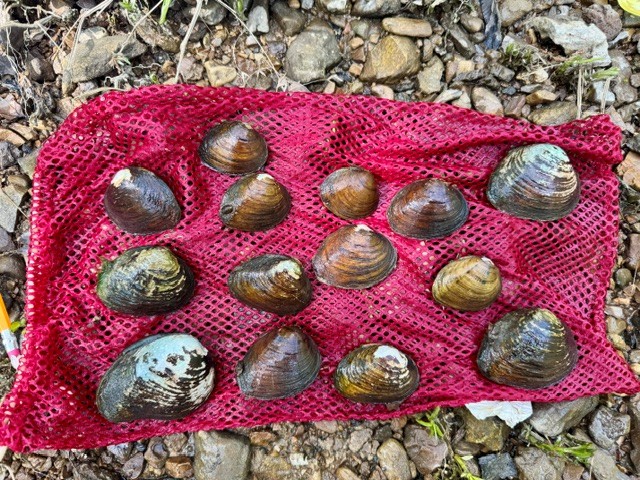
The Nature Conservancy completed another streambank restoration project along the mainstem of the Paint Rock River, duplicating a formula that has proven successful at numerous projects throughout the watershed over the past 20 years. Teaming up with Alabama Rivers and Streams Network (ARSN) partners, including United State Fish and Wildlife Service and Geological Survey of Alabama, the first order of business included surveying mussel populations in the vicinity before any restoration work began. On one of the days, scientists identified more than 20 species, several that were state and federally listed.
The partners also collected data related to water quality and other conditions. After project completion, scientists will conduct long-term, post project monitoring to assess species range and habitat improvements, water quality, sediment abatement and structural integrity.
After completing preliminary monitoring, the partners moved ahead with the project, implementing a nature-based bioengineering approach that combined woody debris and native sod transplants to prevent erosion on approximately 350 linear feet of the streambank. Now stable, this area has the ability to naturally store and filter surface water entering the stream and the underlying aquifer. This design is expected to prevent an estimated 150 metric tons of sediment, as well as other pollutants and nutrients, from entering the river annually.
To date, restoration projects like this have yielded measurable success throughout the watershed. Based on ongoing analysis, some state and federally listed mussel species have expanded their range and several sites are being used by the Alabama Aquatic Biodiversity Center for reintroducing imperiled aquatic species. In addition to species recovery, improved water quality and increased flood resilience, these projects also enhance areas where people go to enjoy the outdoors.
The Paint Rock River has exceptional biodiversity, but sediment from streambank erosion can compromise wildlife habitat, degrade water quality and impact sensitive aquatic species. This is the case when it comes to freshwater mussels, an especially sensitive species. Termed the “liver of the river,” a single mussel can filter up to 15 gallons of water per day. However, there is a threshold on how much sediment they can tolerate. Securing healthy habitat ensures they can do their job, which benefits water quality for aquatic species and local communities.
TNC worked with the following partners to fund this most recent project: Natural Resources Conservation Service (NRCS) Regional Conservation Partnership Program (RCPP) Grant, United States Fish and Wildlife (USFWS) Partners for Fish and Wildlife Program, and the Tennessee Valley Authority (TVA).
Support Our Work in Alabama
Help protect the Paint Rock River and other important places in Alabama for people and nature.
Related articles

Walls of Jericho
The Walls of Jericho covers 21,453 acres, bordering both the Alabama and Tennessee state lines.

Keel Mountain Preserve
This site was purchased to preserve the federally endangered Morefield's leatherflower and protect unique limestone features.

Alabama's Worst Invasives
Learn about Alabama's top ten worst invasive, non-native plant species and what you can do to stop their spread.